
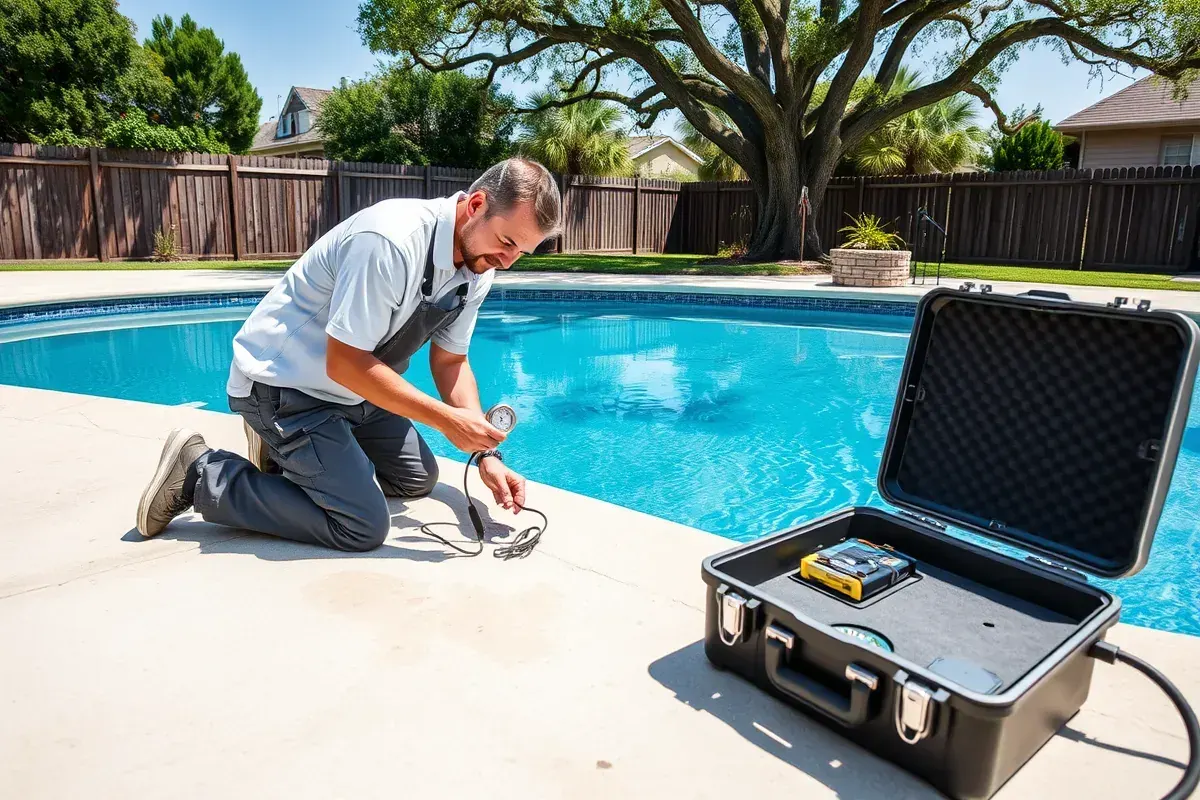
Pool leaks
Pool Autofill Running Constantly in Arlington? Leak, Valve or Evaporation
Autofill always running or the water bill climbing? How to tell a stuck valve from a real pool leak with a simple shutoff test.
Slab leaks
You walk into the kitchen or hallway and your socks get wet. There is no spill, but the grout lines look dark and a thin film of water sits on the tile. On a slab home in Arlington, that is one of the classic signs of a leak under the floor. It is not the only cause, though. Here is how to narrow it down before anyone breaks tile.
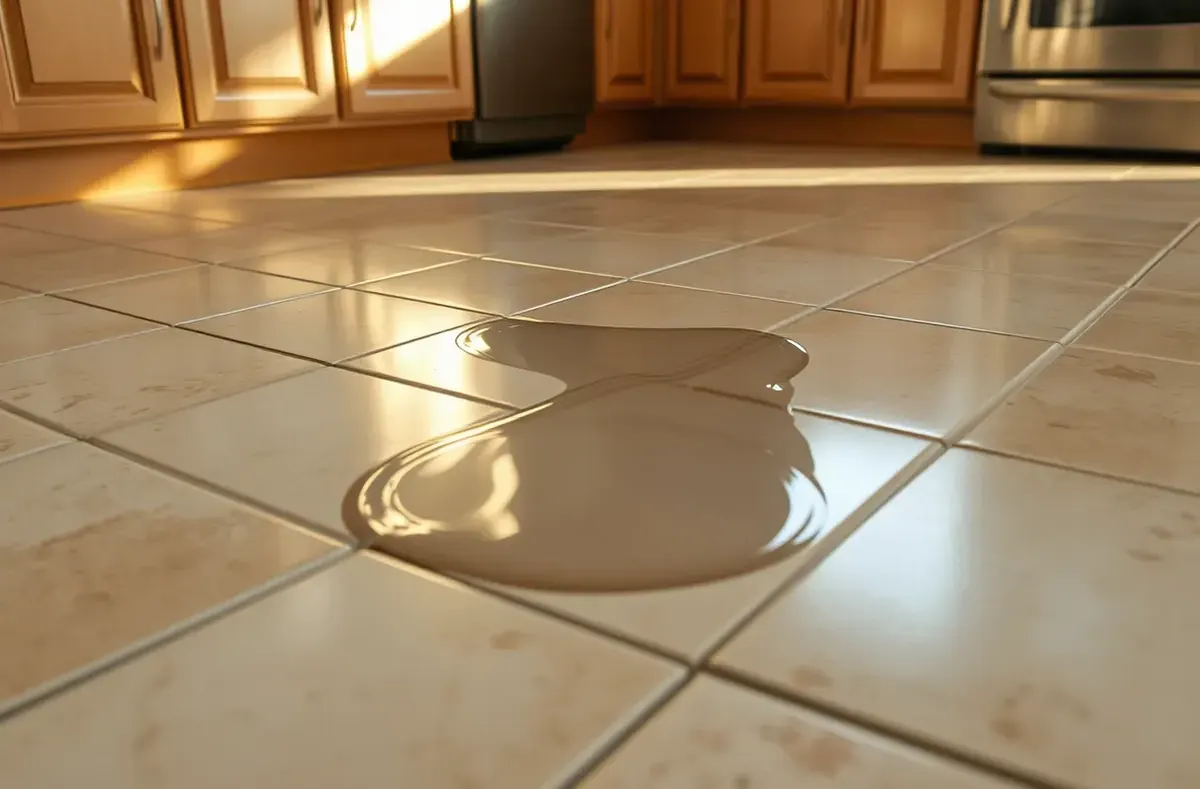
If water is coming up through your tile floor and nothing spilled, turn off every faucet and appliance and check the water meter. If the meter still moves, a pressurized pipe is leaking, often under the slab. If the meter is still, the water is probably coming from a drain, a shower pan, a nearby appliance or outside moisture. Either way, act within a day to protect the floor.
Most Arlington homes sit on concrete slabs. The water lines for the kitchen, bathrooms and water heater run through or under that concrete, usually copper in older homes and PEX in newer builds. When one of those lines leaks, the water has nowhere to go but up. It follows the easiest path, which is often the grout joints in a tile floor.
The most common causes are a leaking water line under the slab, a failed shower pan or tub drain next to the wet area, a dishwasher, ice maker or water heater leak that travels under the tile, a toilet wax ring, or outside water from a high water table or poor drainage pushing up through the slab. The pattern of the wet spot usually points to the source.
| Cause | Clues |
|---|---|
| Supply line slab leak | Meter moves with all water off, area stays wet, may feel warm |
| Hot water line under slab | Warm tile, water heater runs often, sound of running water |
| Shower pan or tub drain | Wet only after showers, grout outside the shower darkens |
| Appliance leak | Wet spot starts near the dishwasher, fridge or water heater |
| Toilet seal | Damp tile around the toilet base, odor, rocking toilet |
| Ground water or drainage | Wet after heavy rain only, near an exterior wall, meter still |
Think you have a leak? A licensed Arlington technician answers 24/7.
Call Now (817) 285-5426Use your water meter. Turn off every fixture, the ice maker and the irrigation system, then read the meter and the small leak indicator. Wait 30 minutes without using water and read it again. If the numbers changed or the indicator spun, a pressurized line is leaking. Next, shut the main valve to see whether the leak is inside the house.
A moving meter usually lines up with a jump on your bill too. Our guide on water leak detection arlington explains how to read the bill for leak clues. If the meter keeps turning with the house valve closed, the problem is probably in the yard, and this post on waterline leak detection arlington covers what happens next.
A warm or hot spot on a tile floor almost always means a hot water line is leaking under the slab. The heat from the escaping water warms the concrete, and you can often feel it with bare feet or see it on a thermal camera. A hot water leak also makes the water heater run more often, which raises the gas or electric bill.
Hot water slab leaks are common in Arlington homes built in the 1970s through the 1990s with copper lines in the slab. North Texas clay soil shrinks in drought and swells after rain, and that movement puts stress on pipes that pass through the concrete. Over time, copper can also wear thin where it rubs against rebar or gravel.
If you feel a warm spot, do not wait. Turn off the cold water valve on top of the water heater to slow the leak, and turn the heater to vacation or pilot mode so it is not heating water that runs into the ground. If the warm water is coming from the tank itself rather than a line, it is a water heater problem, not a slab leak. This overview of water heater repair Mission Viejo CA homeowners use explains the common tank failures and when a repair beats a replacement.
Yes, and those are worth ruling out first because they are cheaper to fix. Water from a shower pan, tub drain, toilet seal or dishwasher can travel under tile and pop up a few feet away. These leaks only happen when the fixture is used, so they won't move the water meter when everything is off.
Dry up surface water, keep foot traffic off the wet area, and run fans or a dehumidifier. If the meter test points to a slab leak, shut the main water valve when you are not using water. Take photos and short videos of the wet tile, the meter and any warm spots. These help with insurance and with the leak detection visit.
A leak detection tech pressure tests the hot and cold lines separately, then pinpoints the leak with acoustic listening gear and thermal imaging. The goal is to mark one spot, usually within a foot or so, so only one or two tiles need to come up for the repair. Most visits take two to four hours.
Our slab leak detection in Arlington service uses that process on tile, wood and carpet floors alike. For a full walk-through of the appointment, read our post on leak detection arlington visits and what to expect on the day.
| Service | Approx. cost in Arlington |
|---|---|
| Slab leak detection | $250 – $600 |
| Slab leak repair (spot repair or reroute) | $1,500 – $4,000 |
Repairs are either a spot repair through a small opening in the floor or a reroute that runs a new line through the attic or walls and abandons the old one. For tile floors, many homeowners pick a reroute so they don't have to match old tile. Save a few spare tiles if you have them in the garage. They make a spot repair much easier.
Call (817) 285-5426 any time. We cover Arlington ZIPs 76001 to 76018, plus Pantego, Dalworthington Gardens and nearby Grand Prairie and Mansfield.
The most common cause in Arlington slab homes is a leaking water line under the slab. Other causes include a shower pan or tub drain, a toilet seal, a dishwasher or ice maker leak, and ground water after heavy rain. A water meter test tells you whether a pressurized pipe is leaking.
No. Shower pans, tub drains, toilets and appliances can all send water under tile. If the meter stays still with all water off and the floor only gets wet after you use a fixture, the fixture is the likely source, not the slab.
A warm or hot spot usually means a hot water line is leaking under the slab. Turn off the cold inlet valve on your water heater to slow it and call for leak detection soon, because hot water leaks also raise your energy bill.
Yes. Leak detection pinpoints the leak so only a small section of tile is removed for a spot repair. Many homeowners choose a reroute instead, which runs a new line through the walls or attic and leaves the tile floor untouched.
Slab leak detection in Arlington usually costs about $250 to $600. Repairs are priced separately and usually run about $1,500 to $4,000, depending on whether a spot repair or a reroute is the better fit.
Pool leaks
Autofill always running or the water bill climbing? How to tell a stuck valve from a real pool leak with a simple shutoff test.
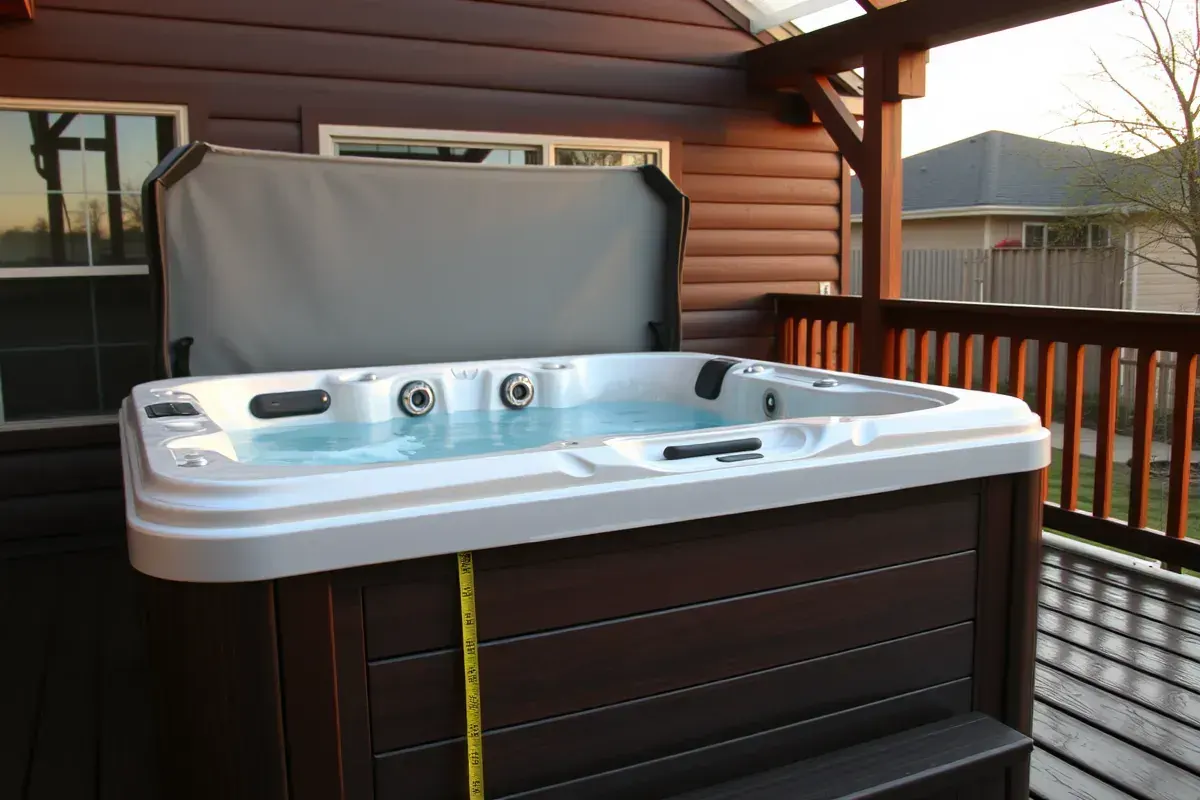
Pool leaks
Wet pad or deck under your spa? How to open the cabinet safely and check the pump seal, heater unions, valves, jets and drain plug.
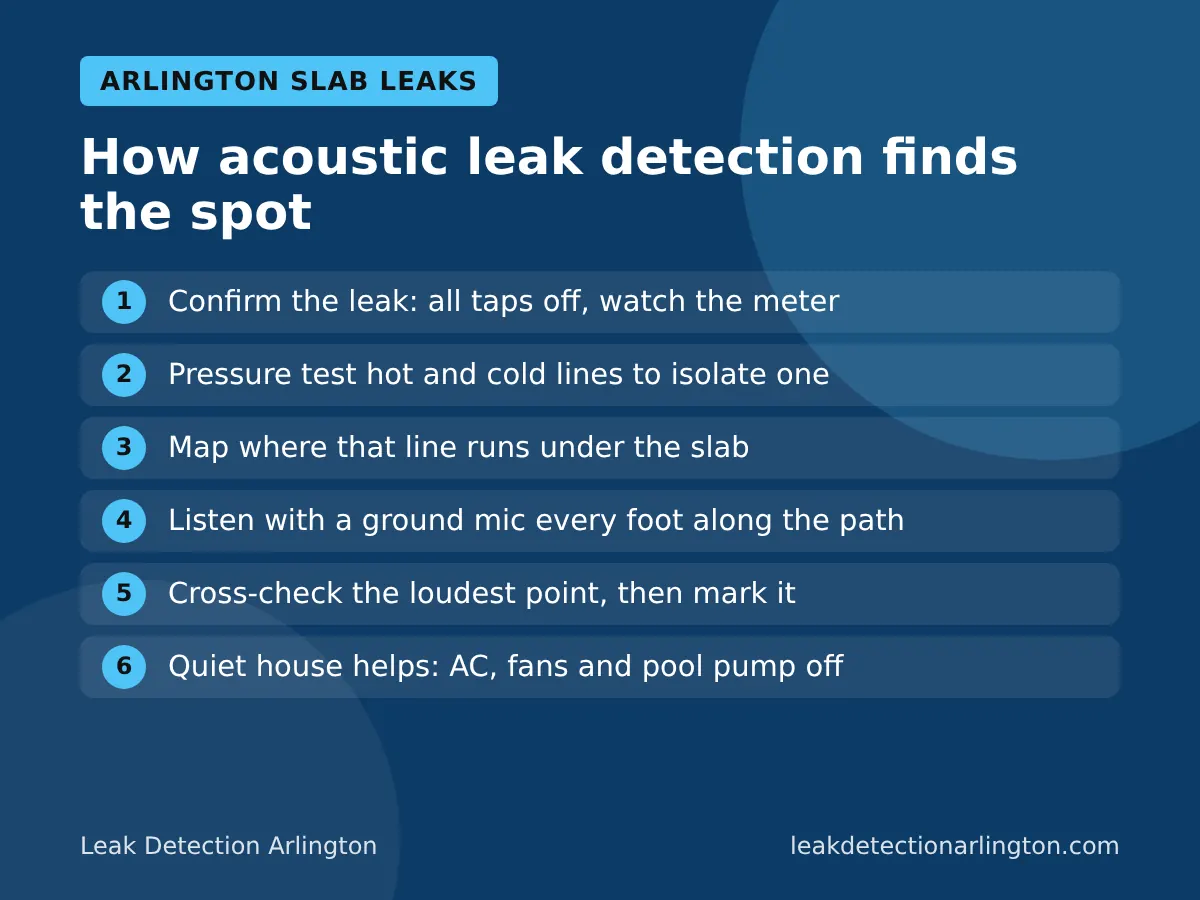
Slab leaks
How ground microphones hear water escaping under concrete, what throws them off in Arlington homes, and how to prep for the visit.
Arlington Leak Pros finds hidden slab, water line, pool and wall leaks without tearing up your home. Open 24/7.
(817) 285-5426