
Pool leaks
Hot Tub Leaking From the Bottom in Arlington? Where to Look First
Wet pad or deck under your spa? How to open the cabinet safely and check the pump seal, heater unions, valves, jets and drain plug.
Pool leaks
An autofill keeps your pool topped off so you never have to drag a hose across the yard. The catch is that it also hides problems. If the autofill seems to run all the time, your water bill jumped, or the yard near the pool stays soft, something is wrong. It may be the valve itself, or it may be quietly feeding a leak.
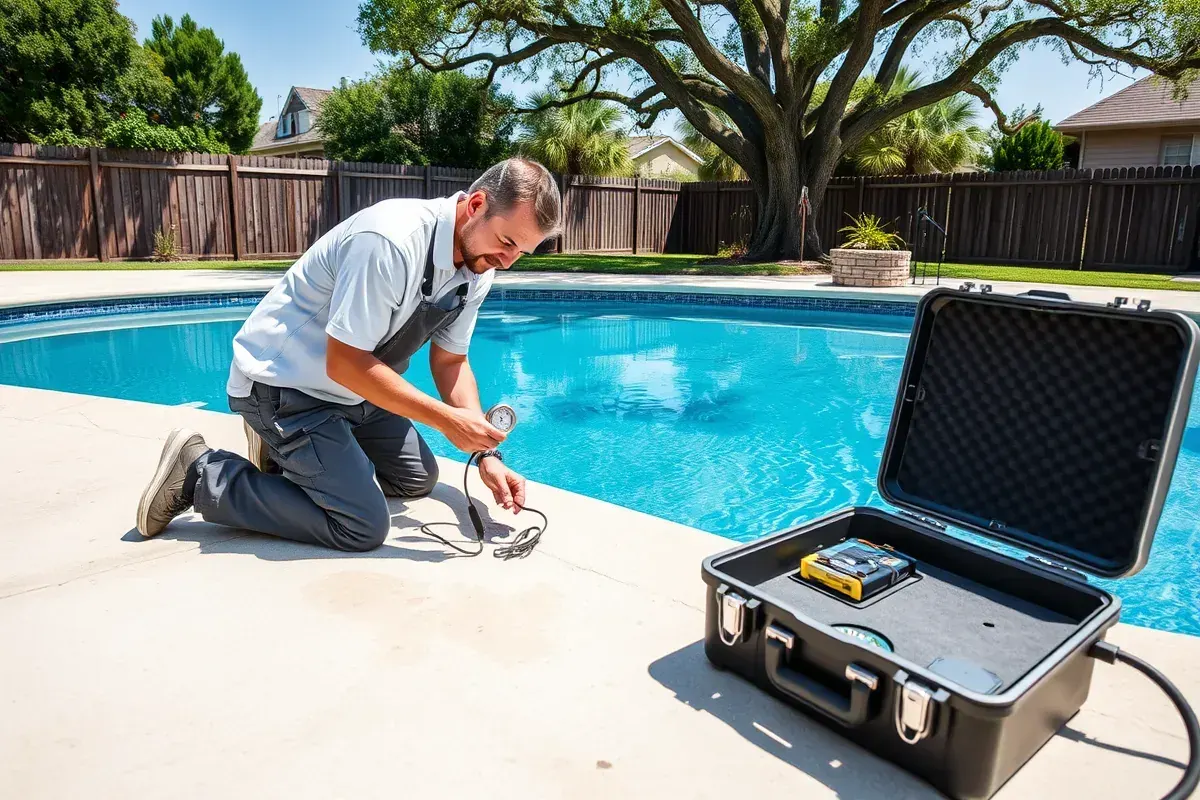
If your pool autofill runs constantly, turn it off for 24 to 48 hours and mark the water level. A pool in Arlington usually loses about a quarter inch a day to evaporation in summer and less in winter. If the level drops much faster than that with the autofill off, you have a leak. If the level holds, the autofill valve or its supply line is the problem.
Many pools in Arlington neighborhoods like Viridian, Southwest Arlington and the Lake Arlington area were built with an autofill tied to the house water line or the irrigation system. That is handy, but it also means a leak can run for months before anyone sees the pool level drop. This guide walks you through the checks, step by step.
A pool autofill is a float valve that adds water when the level drops. It usually sits in a small round lid on the deck, a separate leveler pot, or a unit hung on the skimmer. The float lowers as the water drops, opens the valve, then shuts it once the water reaches the set level. It is fed by a buried line from your house or sprinkler system.
There are three common types in North Texas pools:
An autofill runs nonstop for one of two reasons. Either the pool really is losing water, from evaporation, splash-out or a leak, and the autofill keeps replacing it, or the autofill itself is stuck open. A worn valve seat, a float that sticks, debris in the valve or a level set too high can all keep water flowing.
| What you notice | Likely cause |
|---|---|
| Water always trickling into the leveler pot | Valve seat worn or debris under the washer |
| Pool level sits above the skimmer midpoint | Float set too high or stuck |
| Wet ground between the house and the pool | Leak in the autofill supply line |
| Level drops fast when the autofill is off | Real pool leak in the shell, plumbing or fittings |
| Hissing at the valve with water slowly moving | Valve not sealing fully |
In summer, evaporation is high in North Texas. Hot days, wind and low humidity can pull a quarter inch or more out of the pool each day, so some autofill use is normal from June to September.
Turn the autofill off, then run a bucket test. A bucket test compares the water loss in the pool with the loss in a bucket of pool water sitting on the step. Both lose water to evaporation at about the same rate. If the pool drops faster than the bucket, the extra loss is a leak.
A pool that loses more than about an inch in a day with the autofill off is losing roughly 100 gallons or more for a typical backyard pool. That shows up fast on a water bill.
If the pool holds its level with the autofill off, the autofill is your suspect. Open the leveler lid and watch the float as you push it up. Water should stop completely. If water keeps trickling, the valve is not sealing. If the valve seals but your water meter still moves with everything off, the buried supply line may be leaking.
Simple checks you can make:
A leak in the buried supply line acts like any underground water line leak. It raises the bill and softens the ground. Our guide to water leak detection Arlington homeowners use for a high bill shows how to read the meter and narrow it down.
The most common hidden leaks in Arlington pools are at the skimmer throat, the pool light niche, return fittings, the main drain and the underground suction and return lines. Clay soil movement in North Texas cracks rigid pool plumbing and pulls fittings apart, especially after long dry spells followed by heavy rain.
Our guide to pool leak detection cost in Arlington explains how techs find these without tearing up the deck, using dye, pressure tests and listening gear.
Yes, for a few days, as long as you watch the level. Turning it off stops a leak from washing out soil under the deck and keeps the water bill down. Do not let the level fall below the skimmer opening, because the pump can run dry and burn out. Top it off with a hose while you wait.
If the level falls below the skimmer within a day, switch the pump off and call for help. A pool that drains that fast has a large leak, and soil under the deck or near the house foundation may already be washing out.
Call when the bucket test shows a leak you cannot find, when the pool drops more than about a quarter inch a day beyond evaporation, when wet ground or cracks show up near the deck or foundation, or when the water bill keeps climbing. A tech can pinpoint the leak and tell you whether the autofill or the pool is at fault.
Our pool leak detection in Arlington visits cover the shell, fittings, plumbing lines and the autofill system in one trip. Pool leak detection in Arlington usually runs about $250 to $550, depending on the pool and access, and you get the price before work starts. Repairs are quoted separately once the leak is found.
Call (817) 285-5426 any time. We work across Arlington ZIPs 76001 to 76018, plus Pantego, Dalworthington Gardens and nearby Grand Prairie and Mansfield.
Either the pool is losing water and the autofill keeps replacing it, or the autofill valve is stuck open. Shut the autofill off for a day or two and watch the level. If the pool holds, the valve or its supply line is the problem. If the pool drops fast, it is leaking.
In summer, evaporation in North Texas often takes about a quarter inch a day, sometimes more on hot, windy days. In cooler months it is less. Losing much more than that with the autofill off usually means a leak.
Yes. The autofill keeps the level steady, so you never see the pool drop. The first signs are often a higher water bill, a soft or wet area near the pool, or an autofill that seems to run constantly.
Look for a small shutoff valve on the autofill supply line. It may be near the house hose bib, at the equipment pad, inside a sprinkler valve box or on the leveler itself. Electronic autofills can also be turned off in the pool automation.
Pool leak detection in Arlington usually runs about $250 to $550, depending on the pool size, type and access. Repairs are priced separately after the leak is found.
Pool leaks
Wet pad or deck under your spa? How to open the cabinet safely and check the pump seal, heater unions, valves, jets and drain plug.
Slab leaks
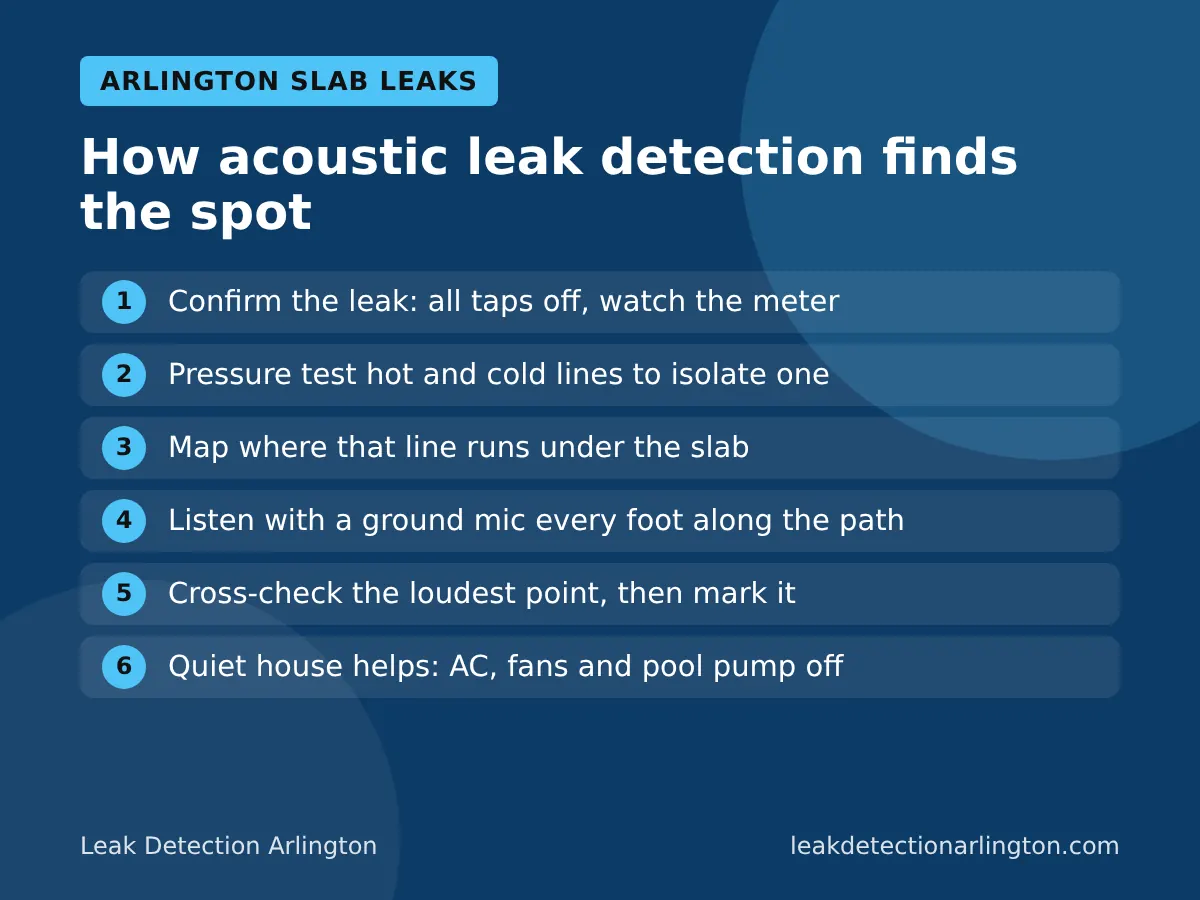
How ground microphones hear water escaping under concrete, what throws them off in Arlington homes, and how to prep for the visit.
Pool leaks
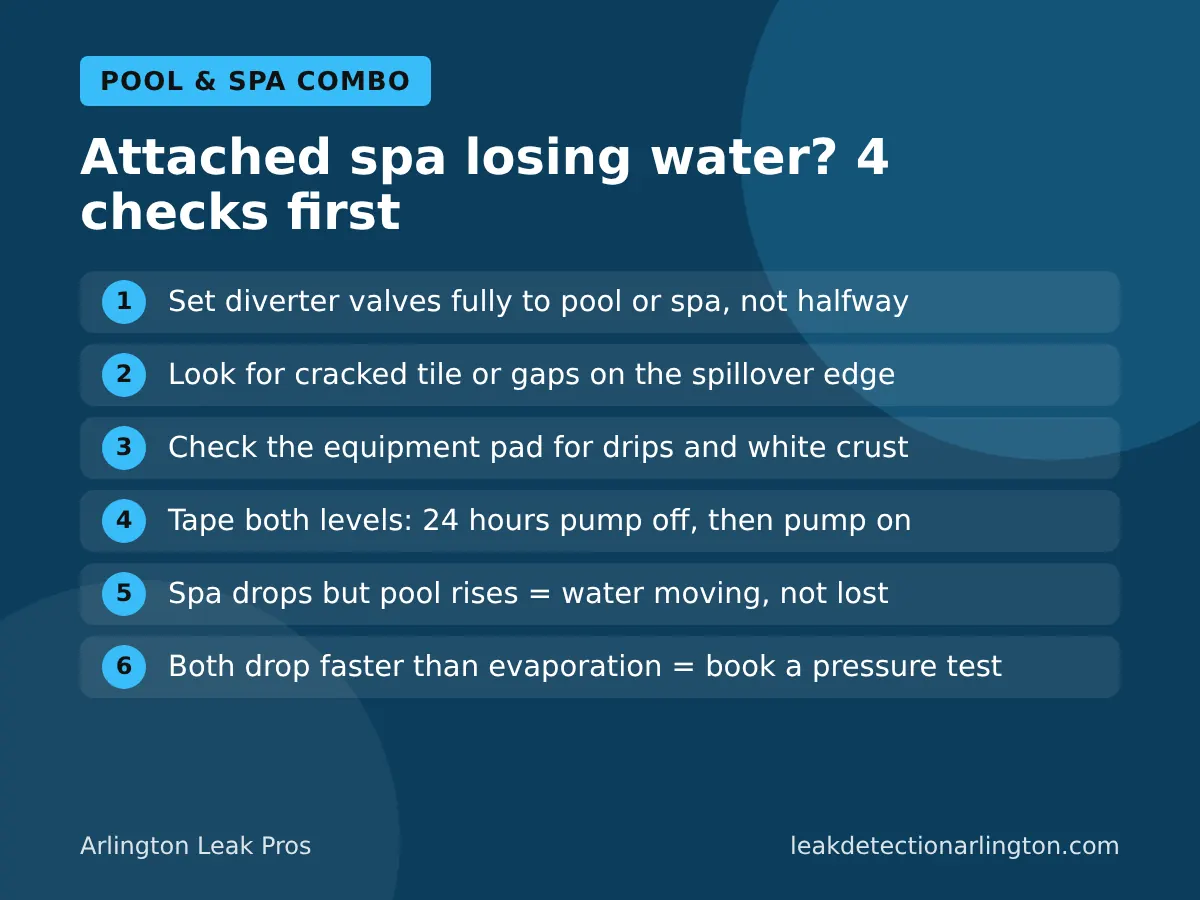
Spa level drops overnight but the pool looks fine? How water moves between an attached spa and pool, and where combo leaks hide.
Arlington Leak Pros finds hidden slab, water line, pool and wall leaks without tearing up your home. Open 24/7.
(817) 285-5426