
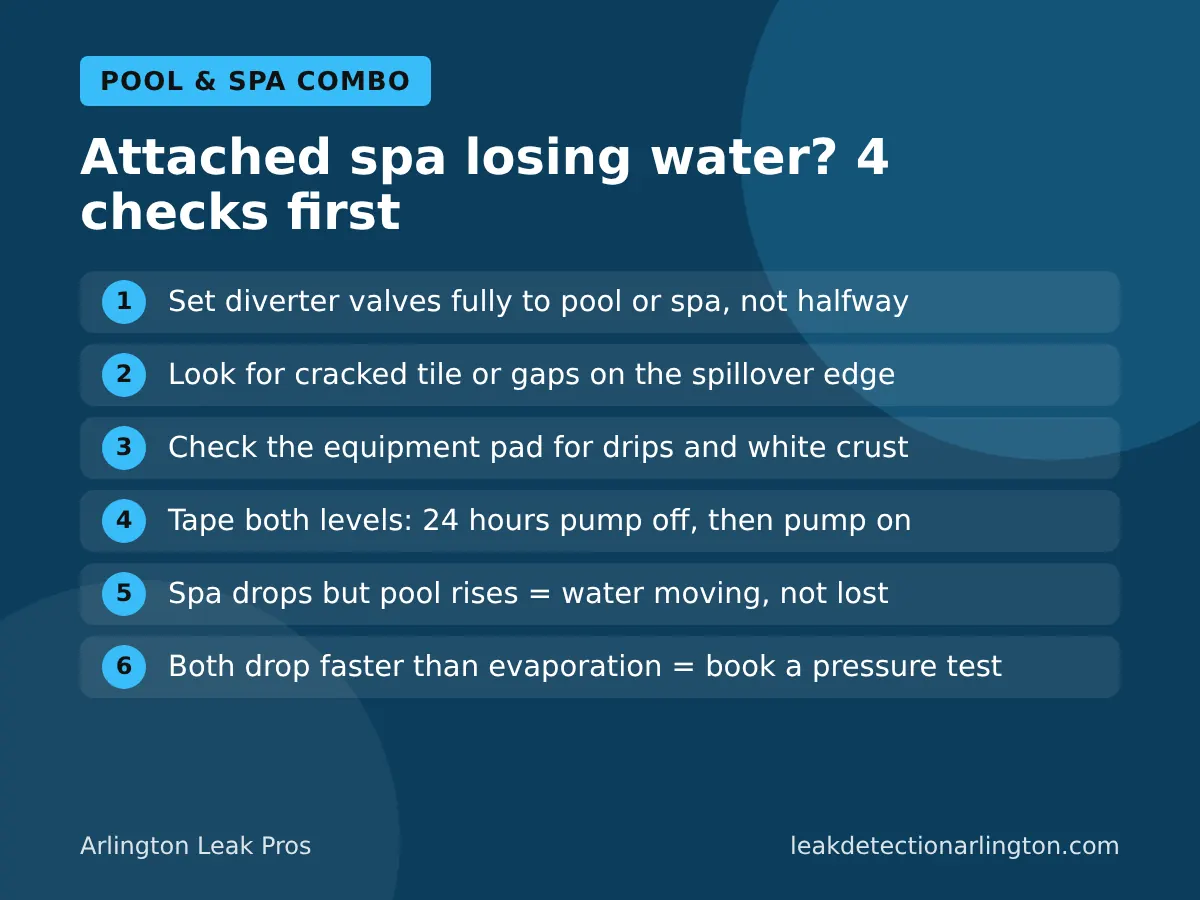
Pool leaks
Attached Spa Losing Water? How Pool and Spa Combo Leaks Work in Arlington
Spa level drops overnight but the pool looks fine? How water moves between an attached spa and pool, and where combo leaks hide.
Slab leaks
A leak under your slab makes noise long before it makes a puddle. Acoustic leak detection uses sensitive ground microphones to hear water escaping from a pressurized pipe, right through tile, carpet and four inches of concrete. Here is how the gear works, what makes it more or less accurate in an Arlington home, and what you can do to help the technician find the spot on the first visit.
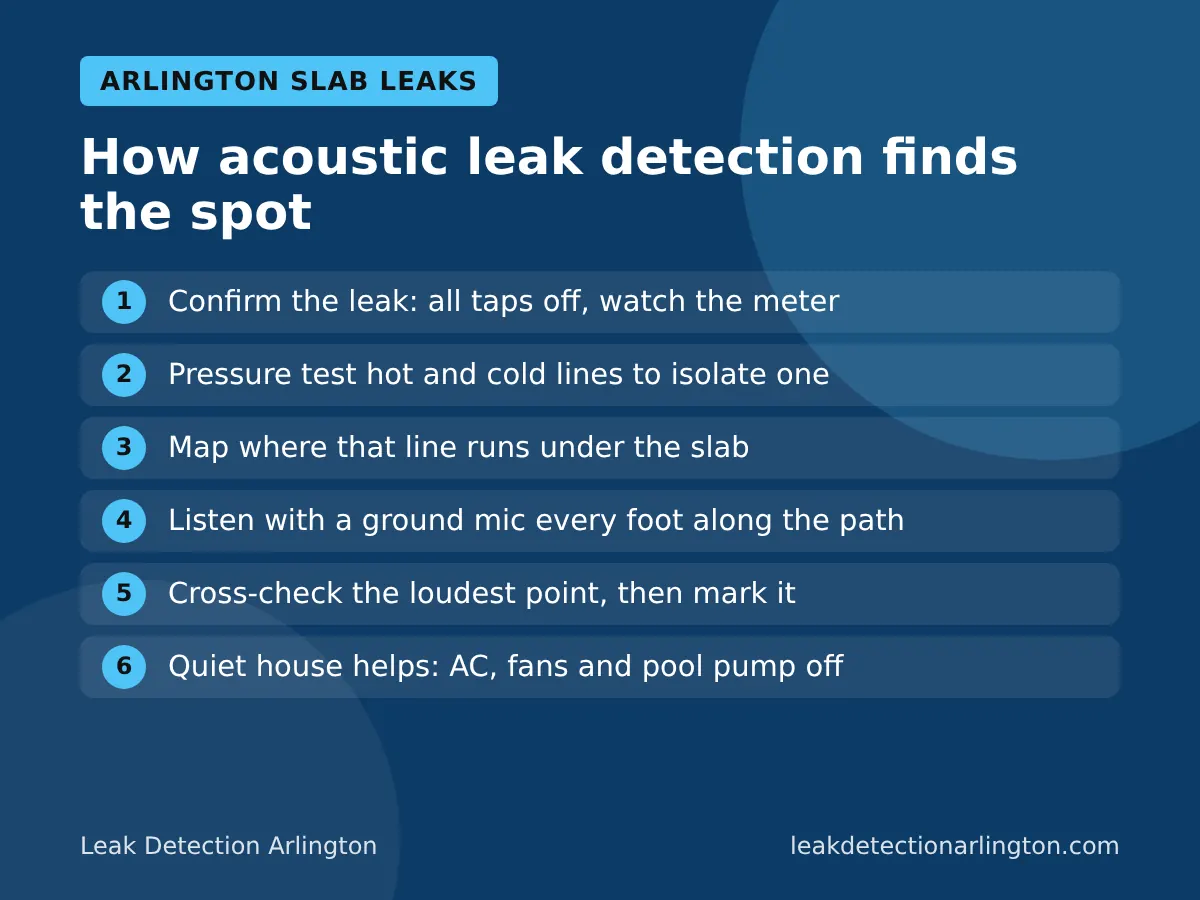
Acoustic leak detection finds a hidden leak by listening for it. Water forced out of a pressurized pipe hisses, and that sound travels through soil and concrete. A technician moves a ground microphone across the floor along the pipe's path and marks the spot where the sound peaks. On most slab leaks it narrows the search to within a foot or two.
Most Arlington homes sit on post-tension or conventional concrete slabs, with copper or PEX water lines buried under them. When one of those lines leaks, you can't see it. You might notice a warm spot on the floor, a meter that never stops, or the sound of running water when every tap is off. Acoustic gear turns that faint sound into a precise mark on the floor.
If you want the full picture of every method a pro might use, start with our overview of how leak detection works. This guide goes deep on the listening part.
The core tool is an electronic ground microphone connected to an amplifier and headphones. It filters out background noise and shows sound levels on a display. Many techs also carry a contact probe for listening at valves and fixtures, and some use a leak noise correlator, which times sound from two sensors to calculate where a leak sits on a buried line.
First they confirm there is a leak with a meter check and a pressure test. Then they figure out which line is leaking, hot or cold, and map where that line runs under the slab. Finally, they listen along that path in small steps, compare readings, and mark the loudest point. The whole process usually takes one to three hours.
Our walkthrough of a leak detection Arlington visit shows what the full appointment looks like from the homeowner's side.
Accuracy depends on how loud the leak is and how much noise competes with it. High water pressure, copper pipe and a hard floor like tile carry sound well. PEX pipe, thick carpet and pad, low pressure, very small leaks and a noisy house all make the sound harder to hear. Good techs adjust and add other tests when needed.
| Factor | Helps accuracy | Hurts accuracy |
|---|---|---|
| Pipe material | Copper carries sound well | PEX is softer and quieter |
| Floor covering | Tile, concrete, wood | Thick carpet and pad |
| Water pressure | Normal or high pressure | Low pressure, tiny pinhole |
| Background noise | Quiet house, night or early morning | HVAC, fridge, pool pump, traffic on I-20 or Cooper St. |
| Soil under the slab | Wet soil around the leak | Voids or dry fill that muffle sound |
Many Arlington homes built in the 1970s and 1980s have copper under the slab, which is the easiest to hear. Newer homes in Viridian and parts of South Arlington often use PEX. On PEX, the tech may need to raise pressure for the test or bring in tracer gas.
It can't hear a leak on a line that isn't under pressure, so drain and sewer leaks need a camera or a different test. It struggles with very slow leaks and with lines under thick carpet. It also can't tell you how much pipe is damaged, only where the water is escaping. That's why it's paired with pressure tests and thermal imaging.
Leaks in walls follow the same idea. Listening at the wall and checking with a moisture meter usually finds the spot, as our guide to a water leak in a wall or ceiling explains.
Make the house as quiet as you can and make the floor easy to reach. Turn off the TV, ceiling fans, dishwasher and washer. Be ready to turn off the AC or furnace and the pool pump for a short while. Clear rugs and furniture along hallways and near the water heater. Know where your meter and main shutoff are.
Basic leak detection in Arlington runs about $150 to $400, and slab leak detection, which uses acoustic gear plus pressure tests and thermal imaging, runs about $250 to $600. You get the price before work starts. Repairs are priced separately once the leak is marked, and slab repairs usually run about $1,500 to $4,000.
Acoustic detection is part of the visit, not an add-on. The value is in the mark: a precise spot means the repair crew opens one small area of floor instead of jackhammering several. That alone can save hundreds of dollars in flooring and patching.
Need the leak found? Our team handles slab leak detection in Arlington with acoustic gear, thermal cameras and pressure tests. Call (817) 285-5426 24/7. We cover Arlington ZIP codes 76001 to 76018, plus Pantego, Dalworthington Gardens and nearby Grand Prairie.
It is a way of finding hidden leaks by listening for them. Water escaping a pressurized pipe makes a hiss that travels through soil and concrete. A ground microphone and amplifier pick up that sound so a technician can mark the spot where it is loudest.
On most slab leaks it narrows the spot to within a foot or two. Accuracy is best on copper lines under tile with normal water pressure. Thick carpet, PEX pipe, very small leaks and background noise make it harder, so techs pair it with pressure tests and thermal imaging.
No. The microphone just sits on the floor. Nothing is cut or drilled to listen. The only opening comes later, at the marked spot, if you choose to repair the leak there.
Often yes, but PEX is quieter than copper. The technician may raise the test pressure or use tracer gas when the sound is too faint to pinpoint.
Slab leak detection usually runs about $250 to $600 in Arlington, and basic leak detection about $150 to $400. Repairs are priced separately once the leak is found.
Pool leaks
Spa level drops overnight but the pool looks fine? How water moves between an attached spa and pool, and where combo leaks hide.
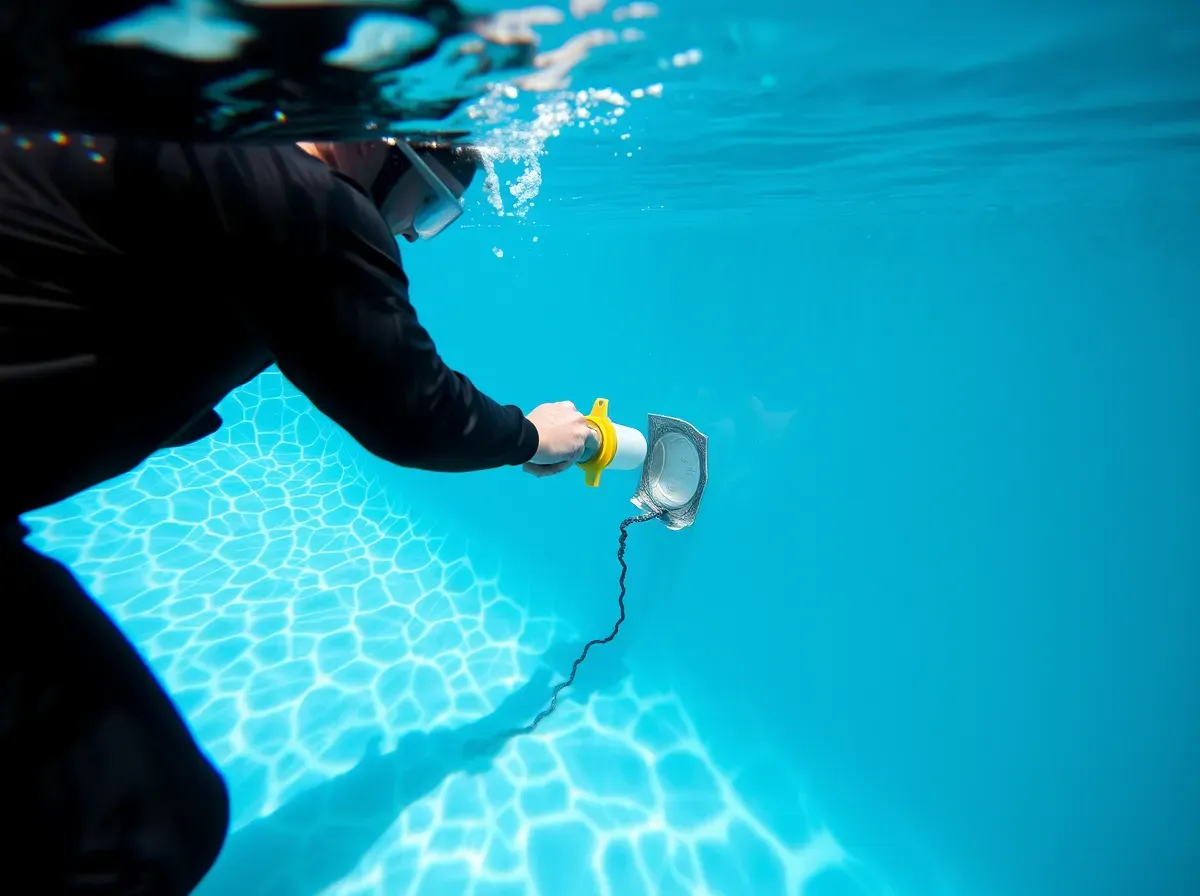
Pool leaks
The leak is marked. Now what? How skimmer, light niche, crack and underground plumbing leaks get fixed in Arlington pools.
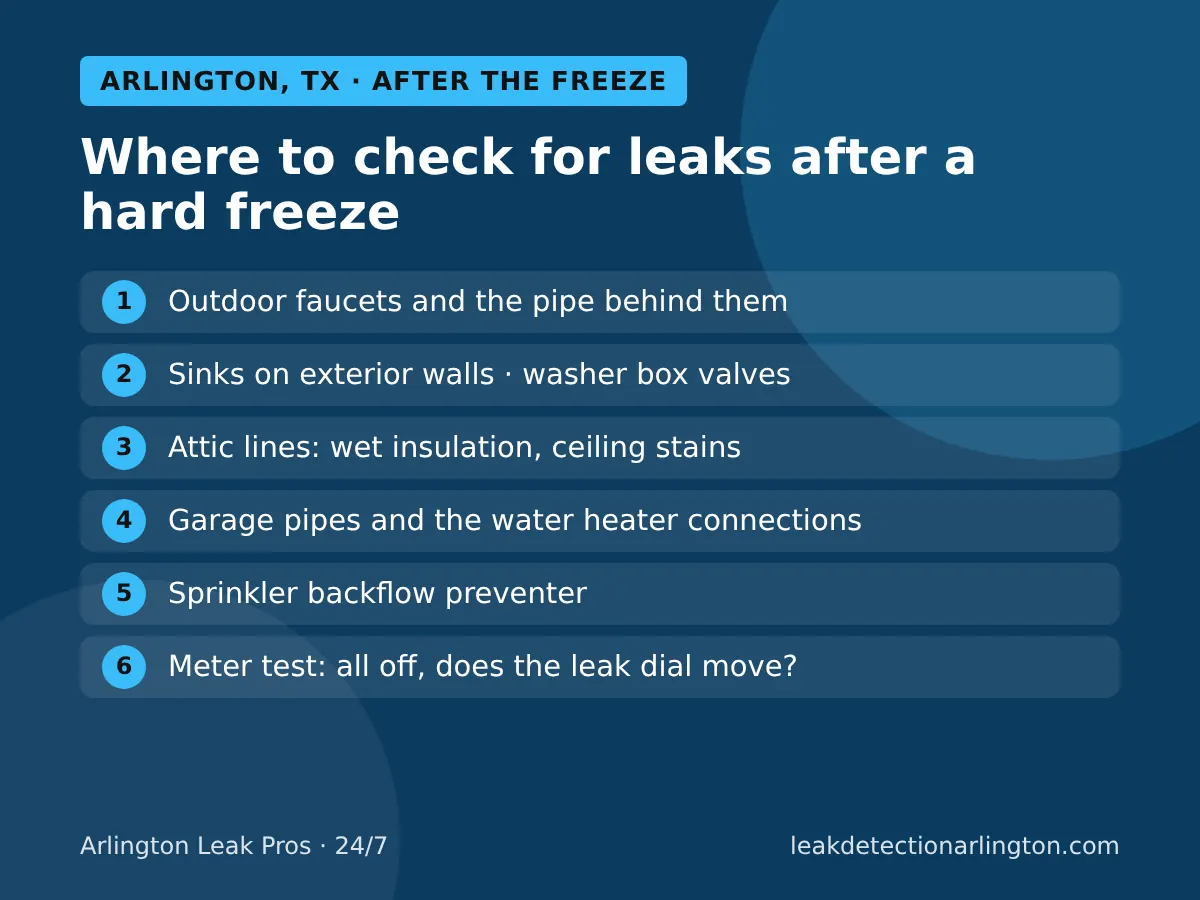
Freeze leaks
Pipes froze overnight? Where cracked lines hide after the thaw in Arlington homes, from hose bibs to attics, slabs and yard lines.
Arlington Leak Pros finds hidden slab, water line, pool and wall leaks without tearing up your home. Open 24/7.
(817) 285-5426