
Slab leaks
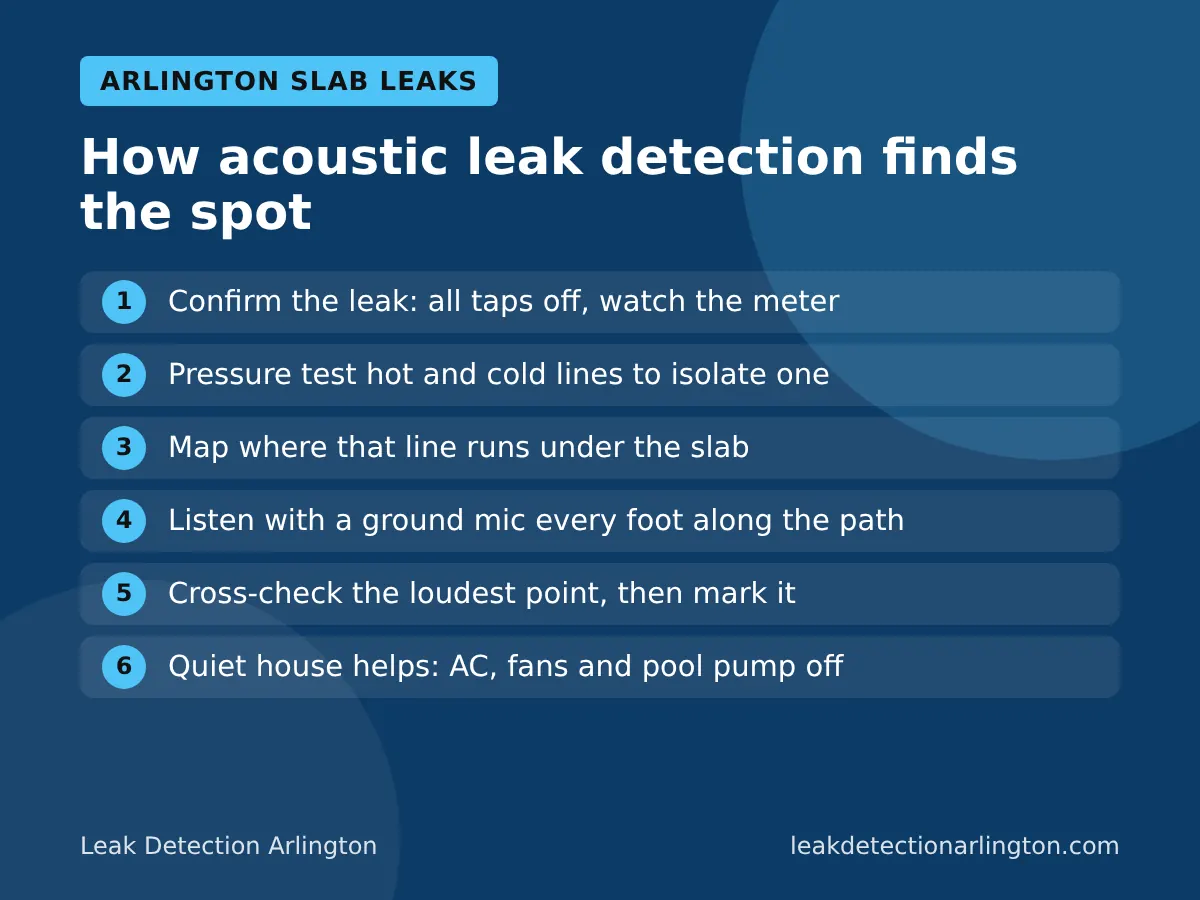
Acoustic Leak Detection in Arlington: How Listening Gear Finds Leaks Under a Slab
How ground microphones hear water escaping under concrete, what throws them off in Arlington homes, and how to prep for the visit.
Pool leaks
A wet pad under your hot tub, a dark stain on the deck boards, or a water level that drops every few days usually means a leak inside the cabinet. Most of those leaks start in the equipment bay, where the pump, heater and valves sit. Here is how to open it up safely, where water usually comes from, and what you can fix yourself before you call for help.
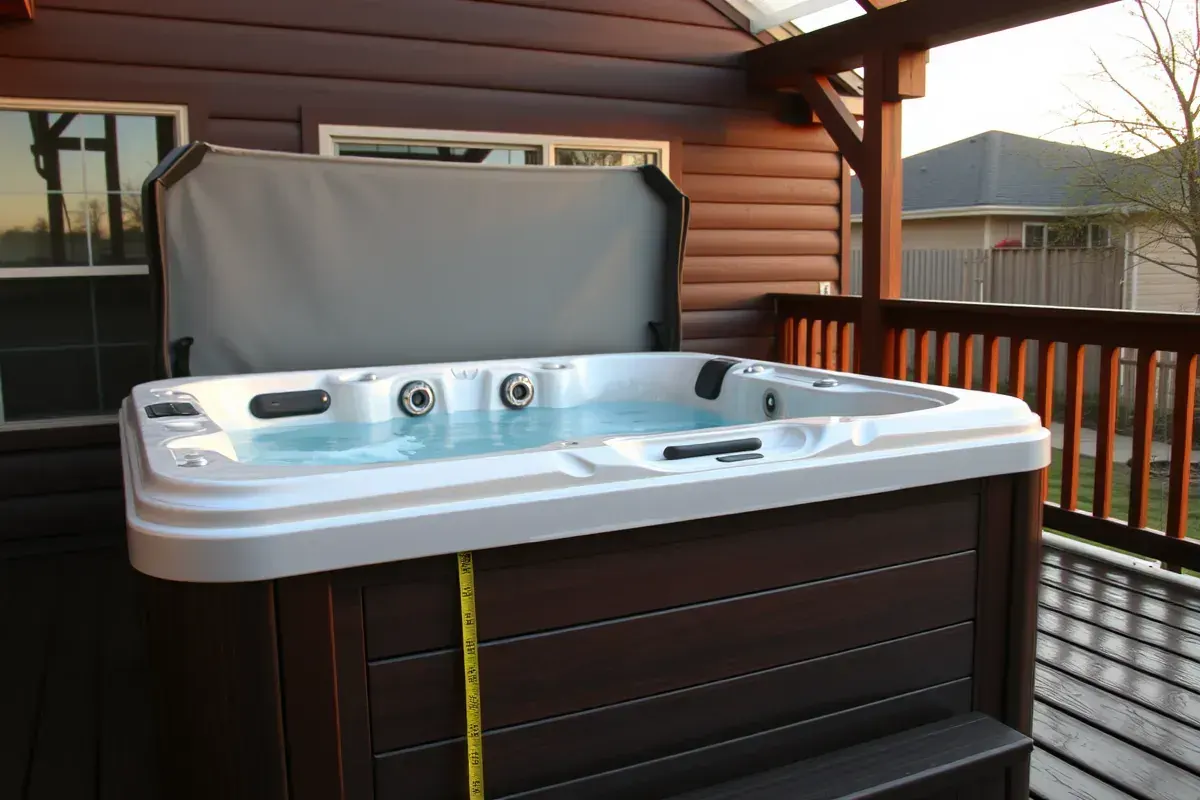
When a hot tub leaks from the bottom, the water usually comes from the equipment bay: a worn pump shaft seal, a loose heater union, a cracked slice valve or a dripping drain valve. Turn off power at the GFCI, remove the side panel by the equipment, dry everything, then run the pump and watch with a flashlight for the first drip.
Portable spas are common in Arlington backyards, from the older homes around Lake Arlington and Dalworthington Gardens to newer builds in Viridian and southeast Arlington near Mansfield. Most sit on a deck, a concrete pad or pavers. When water shows up under the cabinet, it can rot deck boards, wash out a gravel base or, if the spa sits close to the house, soak into the foundation edge.
If you are not sure the tub is leaking at all, our service page on hot tub leak detection in Arlington explains how much water loss is normal and how to run a simple level test first.
Yes, if you cut the power first. A hot tub runs on a dedicated 240-volt circuit with a GFCI disconnect box nearby. Switch that off before you remove any panel. Water and electricity sit inside the same cabinet, so never reach in with the power on, and never stand in water while working near the controls.
Some spas are filled with spray foam around the plumbing. If yours is, the leak may be hidden in the foam. Look for foam that is soaked, discolored or soft. That is a job for a pro, because digging out foam without care can damage lines.
The most common spots are the pump shaft seal, the unions on each side of the pump and heater, the slice or gate valves, the drain valve, and the backs of jets and fittings. Freeze damage, age and chemical wear are the main causes. Each leak leaves clues, like a drip pattern or a crusty white ring.
| Leak spot | Clue | Typical fix |
|---|---|---|
| Pump shaft seal | Drip from under the motor, often only when the pump runs | Replace the seal |
| Pump or heater unions | Wet threads, white crust on the big nuts | Hand-tighten or replace the O-ring |
| Slice or gate valves | Drip from the valve stem or body | Replace the valve O-rings or the valve |
| Drain valve | Wet spot at the base on one side | Tighten the cap or replace the valve |
| Jet bodies and fittings | Water running down the inside of the shell | Reseal or replace the jet body |
| Cracked pipe or fitting | Steady leak in one spot, worse with the pump on | Cut out and replace the section |
With the panel off and the parts dry, turn the power back on and run the jets on high. Watch the pump, the heater and every union with a flashlight. A pump seal leak usually drips from the gap between the motor and the wet end. Union leaks show up at the large plastic nuts on both sides of the pump and heater.
North Texas water is hard, and many Arlington spa owners deal with scale. White, chalky crust on a fitting usually means water has been seeping there for a while and evaporating.
Yes. Arlington does not freeze often, but hard freezes like the February 2021 storm cracked a lot of spa plumbing. A tub that lost power or was drained without blowing out the lines can split a pipe, a valve body or a pump housing. These cracks often stay hidden until the next time the pump runs.
If your tub sat without power during a freeze, check the lowest lines and the pump wet end closely. A crack may only leak under pressure, so look while the jets run. A slow leak that started right after a cold snap is a strong hint.
If the cabinet stays dry but the ground or pad around the spa is wet, the water may be coming from somewhere else. A sprinkler line, a hose bib or a leak in your home's water line can all wet the same spot. Turn off every fixture and watch your water meter. If it still moves, the leak is in your house plumbing.
That kind of hidden leak needs a different test. Our guide on what happens during a leak detection Arlington visit covers how pros check the meter, the lines and the slab. If you also have an in-ground pool, the pool may be the real source. Our guide to what pool leak detection costs in Arlington explains what that test involves.
Call when you cannot find the leak with the panel off, when the leak is buried in foam, when the shell or a jet body is leaking, or when water is reaching the house. A pro can pressure test each line, use dye at the jets, and listen for leaks without tearing out foam or deck boards.
Hot tub leak detection in Arlington usually runs about $250 to $550, depending on the spa and how much access there is. You get the price before work starts, and repairs are quoted separately once the leak is found.
Call (817) 285-5426 24/7. We cover Arlington ZIPs from 76001 to 76018, plus Pantego, Dalworthington Gardens and nearby Grand Prairie and Mansfield.
Most bottom leaks come from the equipment bay. The usual causes are a worn pump shaft seal, loose or cracked unions at the pump and heater, a leaking slice valve, a drain valve that is not fully closed, or a cracked fitting from freeze damage.
Some leaks are simple. Hand-tightening a union, closing a drain valve or replacing a union O-ring are DIY jobs. Pump seals, cracked pipes, jet bodies and leaks inside spray foam usually need a technician. Always turn off the power at the GFCI first.
A covered hot tub usually loses only a small amount to evaporation, often less than a quarter inch a day. Losing an inch or more a day, or seeing water under the cabinet, points to a leak.
A small, slow drip away from the electrical parts is not an immediate hazard, but water near the control pack or heater is. If water is reaching electrical parts or the GFCI trips, turn the power off and do not use the tub until it is fixed.
Hot tub leak detection in Arlington usually runs about $250 to $550, depending on the spa and access. Repairs are priced separately after the leak is found.
Slab leaks
How ground microphones hear water escaping under concrete, what throws them off in Arlington homes, and how to prep for the visit.
Pool leaks
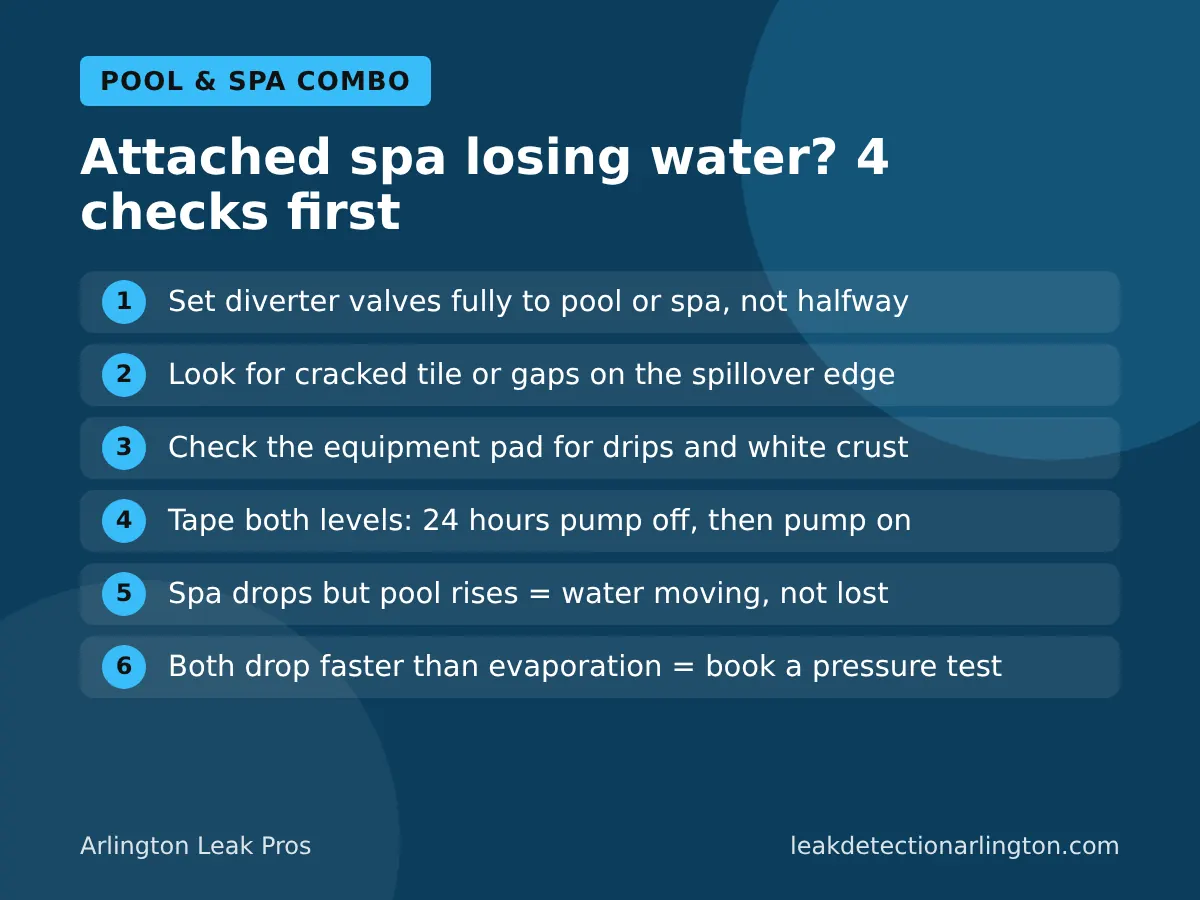
Spa level drops overnight but the pool looks fine? How water moves between an attached spa and pool, and where combo leaks hide.
Pool leaks
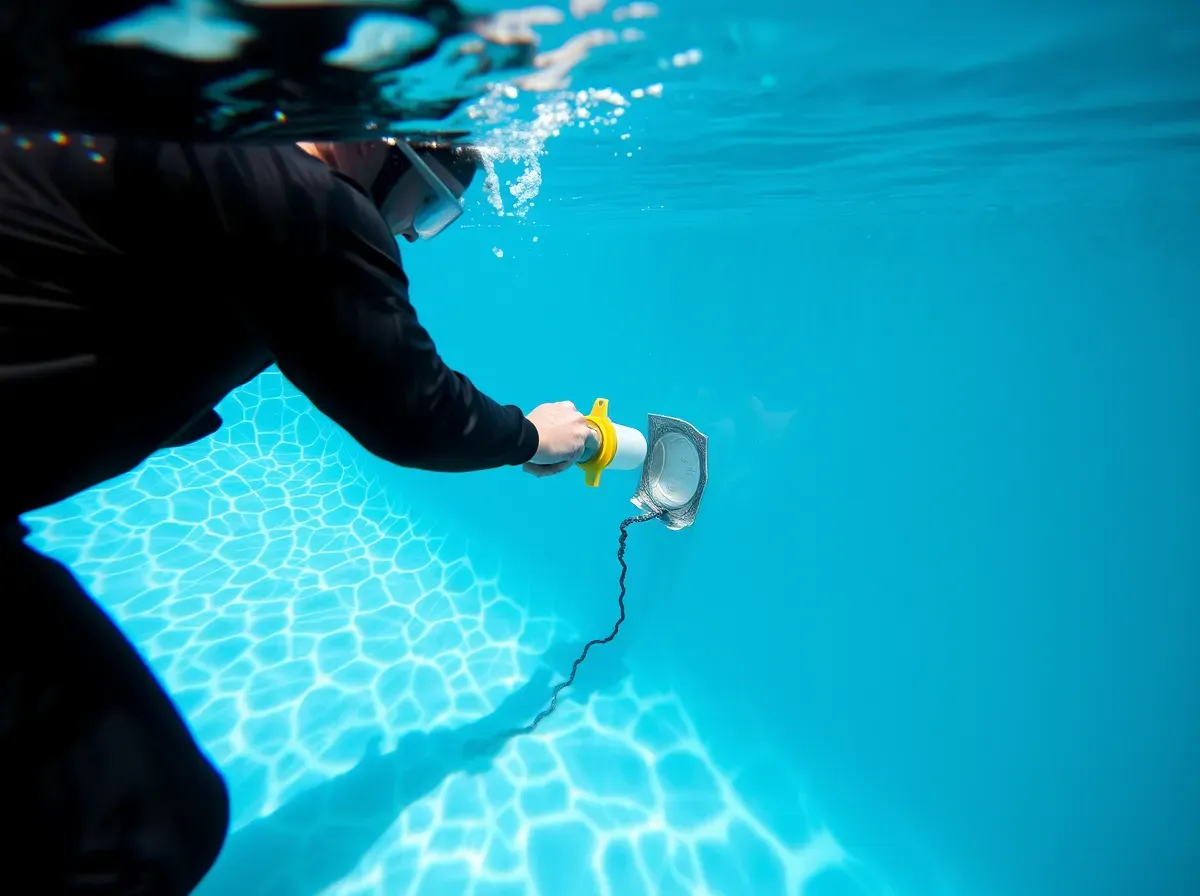
The leak is marked. Now what? How skimmer, light niche, crack and underground plumbing leaks get fixed in Arlington pools.
Arlington Leak Pros finds hidden slab, water line, pool and wall leaks without tearing up your home. Open 24/7.
(817) 285-5426