
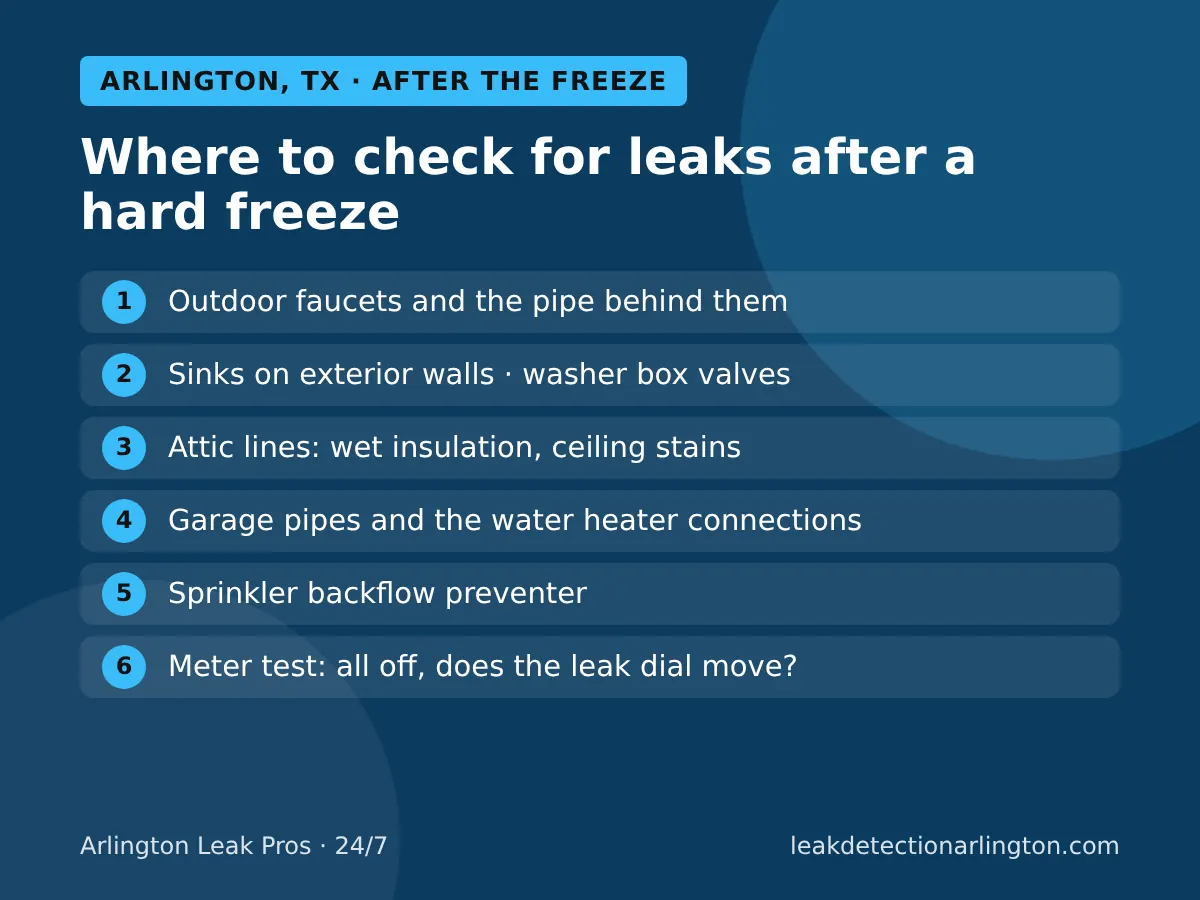
Freeze leaks
Leaks After a Hard Freeze in Arlington: Where to Check First
Pipes froze overnight? Where cracked lines hide after the thaw in Arlington homes, from hose bibs to attics, slabs and yard lines.
Pool leaks
Finding a pool leak is only half the job. Once the leak detection report says where the water is going, you still need the right repair, done the right way, so the pool holds water again. In Arlington, where clay soil shifts and summer heat hits plaster hard, the fix depends on where the leak is. Here is what each common repair involves and how to plan for it.
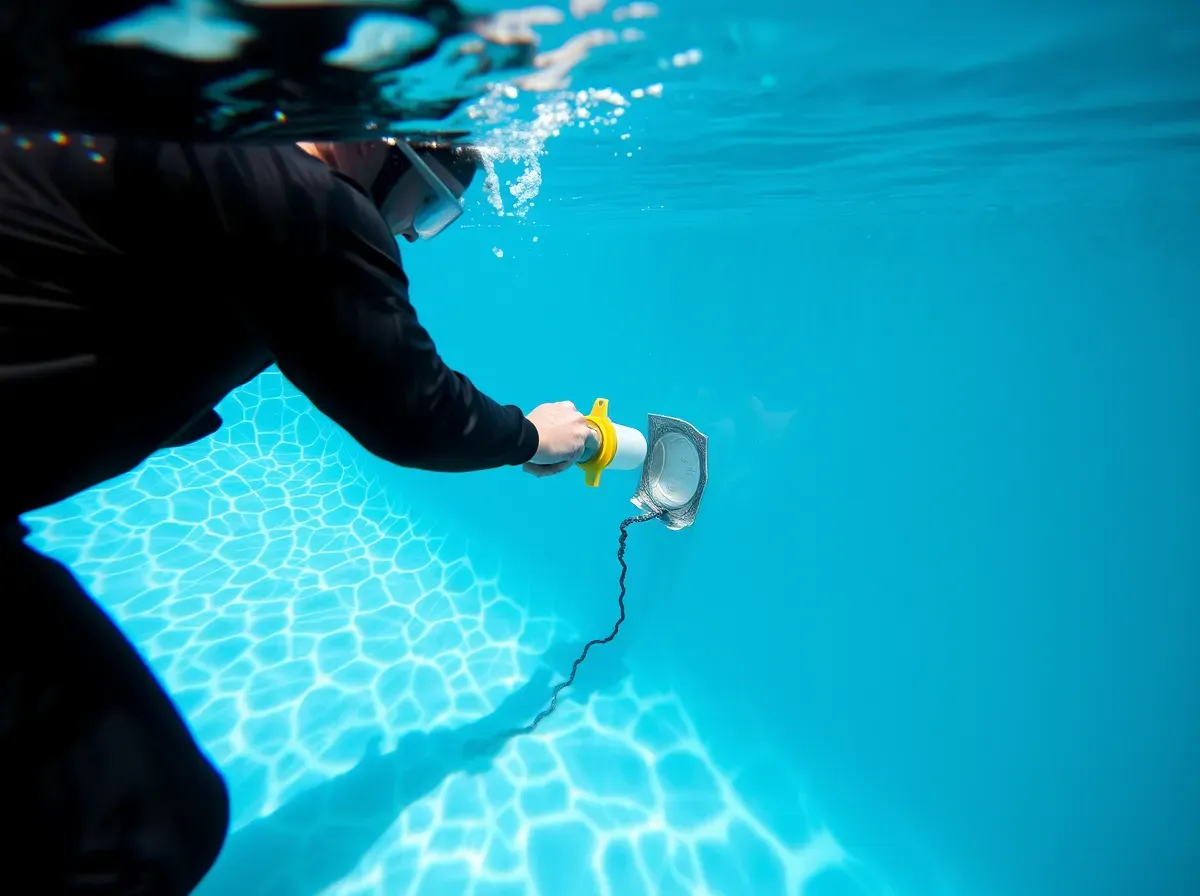
After a pool leak is found, the repair depends on where it is. Small leaks at a skimmer throat, light niche, return fitting or plaster crack are often patched underwater in an hour or two. Leaks in the underground plumbing need digging or cutting through the deck to reach the pipe. A pressure test after the repair confirms the pool holds water again.
Many Arlington pool owners call us after the water level drops more than a quarter inch a day. Once our pool leak detection in Arlington marks the leak, you get a report with each leak spot, photos and the test results. That report is what the repair crew works from.
The most common pool leaks in Arlington are at the skimmer, around light niches, at return and main drain fittings, through cracks in plaster or gunite, and in the buried plumbing lines. Arlington's expansive clay soil moves between wet and dry seasons, which stresses the joint between the skimmer and the pool shell and the pipes under the deck.
| Leak location | How it is usually repaired | Repair scale |
|---|---|---|
| Skimmer throat or skimmer-to-shell joint | Underwater putty or epoxy; skimmer rebuild if cracked through | Minor to moderate |
| Light niche or conduit | Seal the conduit and niche with pool putty or a conduit plug | Minor |
| Return jets and fittings | Re-seal the fitting; replace a cracked fitting | Minor |
| Plaster or gunite crack | Route out and fill with pool putty or epoxy; large cracks need structural repair | Minor to major |
| Main drain | Seal the drain body or line; may need a diver | Moderate |
| Underground suction or return line | Cut the deck, dig, replace the broken pipe section | Moderate to major |
| Equipment pad (pump, filter, valves) | Replace seals, O-rings, unions or valves | Minor |
Most skimmer and light niche leaks are fixed underwater with a two-part pool putty or epoxy made to cure wet. The tech cleans the joint, packs the putty into the gap, and smooths it flush. The pool does not need to be drained. If the skimmer body itself is cracked all the way through, it is cut out and replaced.
A skimmer that leaks only when the water is high, or a level that stops dropping at the middle of the skimmer opening, points to this kind of leak. Our post on Arlington pool skimmer leaks explains the signs in more detail.
Light niches leak where the light cord runs through a conduit back to the junction box. Sealing the conduit stops the water. The light itself usually does not need replacing unless it is also failing.
Hairline cracks in the plaster finish are usually cosmetic and often do not leak. A crack that leaks is routed into a small groove, then filled with pool putty, epoxy or a hydraulic cement made for wet use. A crack that keeps growing or runs across the floor may be structural and needs a pool builder to evaluate it.
In Arlington, long dry spells in July and August pull water out of the clay soil. When fall rain comes, the soil swells again. That cycle can open cracks in older pools, especially ones built in the 1980s and 1990s in neighborhoods like Fielder Plaza, Southwest Arlington and around Lake Arlington.
Underground plumbing leaks are the biggest repair. The crew uses the leak detection marks to cut a small section of deck right over the break, digs down to the pipe, and replaces the broken piece with new PVC and fittings. Then the line is pressure tested, backfilled and the deck is patched. Most jobs take one to two days.
Suction lines that run to the skimmer and main drain, and return lines that run back to the jets, are the usual culprits. Our guide to pool plumbing leaks in Arlington covers the signs, like air bubbles at the returns or a pump that loses prime.
Keep the pool full enough that the pump does not suck air, but do not keep topping it off with a hose for days if you can avoid it. Run the pump only as much as needed, keep a log of how fast the water drops, and have the leak detection report ready for the repair crew.
After the repair, a follow-up pressure test on the plumbing and a bucket test or level log on the pool show whether the leak is gone. Normal evaporation in Arlington can be about a quarter inch a day in hot, windy weather. If the pool drops less than a bucket of water set on the step, the leak is fixed.
If you are not sure, the cost of a second check is small next to a summer of water loss. Our guide to pool leak detection Arlington TX cost breaks it down: a standard visit runs about $250 to $550, and a basic check on nearby house plumbing such as an auto-fill line runs about $150 to $400. Repair work is priced separately once the leak is located.
Some small leaks can be a DIY fix. If a dye test clearly shows water pulling into a light niche or a loose return fitting near the surface, a two-part pool putty can seal it. Plumbing leaks, main drains, deep cracks and anything that needs the deck cut should be left to a pro.
The risk with DIY is fixing the wrong spot. Many pools have more than one leak. A patch on the obvious crack does nothing if the real loss is in a return line under the deck. That is why our leak detection service tests the whole system, from the shell to the plumbing, before anything gets patched.
Need a leak found or confirmed before you book a repair? Call (817) 285-5426 24/7. We cover pools across Arlington, from Viridian and North Arlington to Dalworthington Gardens, Pantego and South Arlington near the 76001 and 76017 ZIP codes.
Small underwater patches at a skimmer, light niche or fitting often take an hour or two. Underground plumbing repairs that need the deck cut usually take one to two days, plus time for the deck patch to cure.
Usually not. Most shell, skimmer and light niche leaks are repaired underwater with wet-cure putty or epoxy. Draining is only needed for some large crack repairs or resurfacing, and it should be done by a pro to avoid damage.
Not exactly. New concrete is a different color and texture than older decking. Some owners add a coating or pavers later. The goal of the repair is a tight, tested pipe under a solid patch.
Policies vary. Many cover sudden breaks but not wear and tear, slow leaks or settling. Keep the leak detection report and photos. They help if you file a claim.
Pools can have more than one leak, or the repair may not have held. Run a bucket test for a few days. If the loss is more than evaporation, a follow-up pressure test can find what was missed.
Freeze leaks
Pipes froze overnight? Where cracked lines hide after the thaw in Arlington homes, from hose bibs to attics, slabs and yard lines.
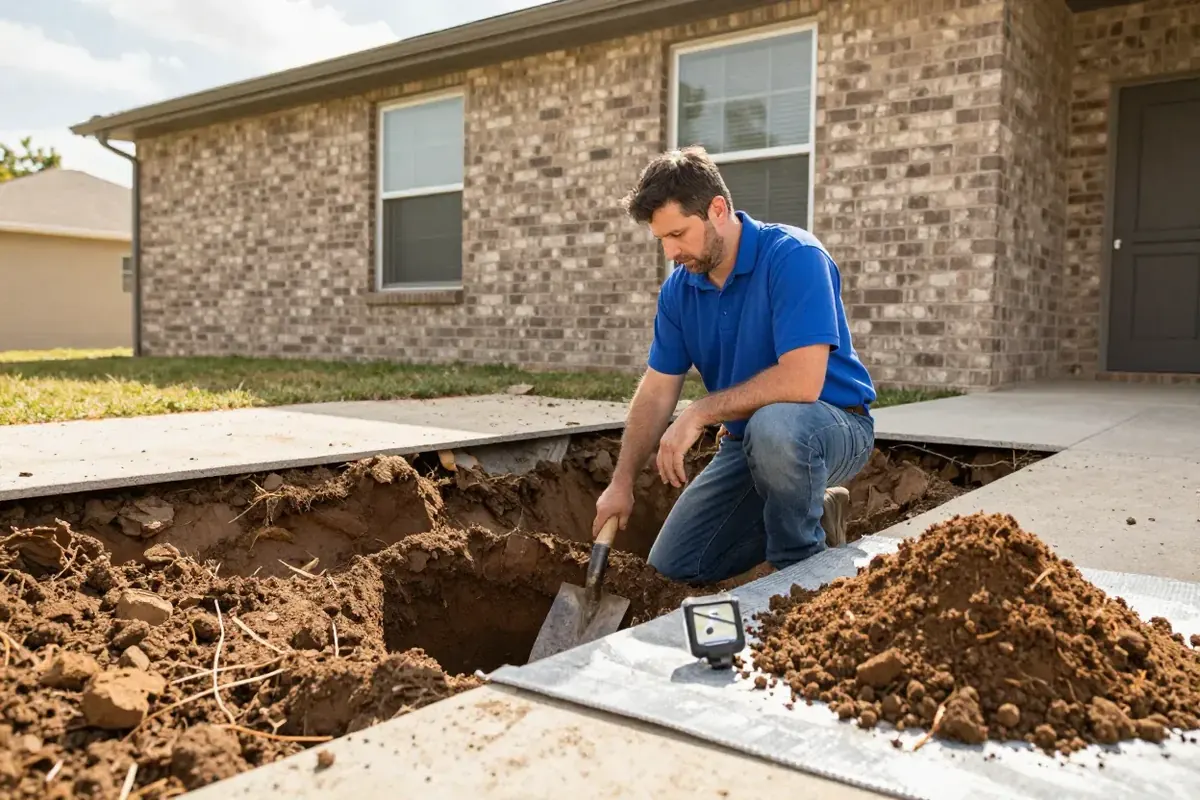
Slab leaks
Leak under the kitchen tile or a finished closet? How tunneling under an Arlington slab compares with breaking the floor, and when each one makes sense.
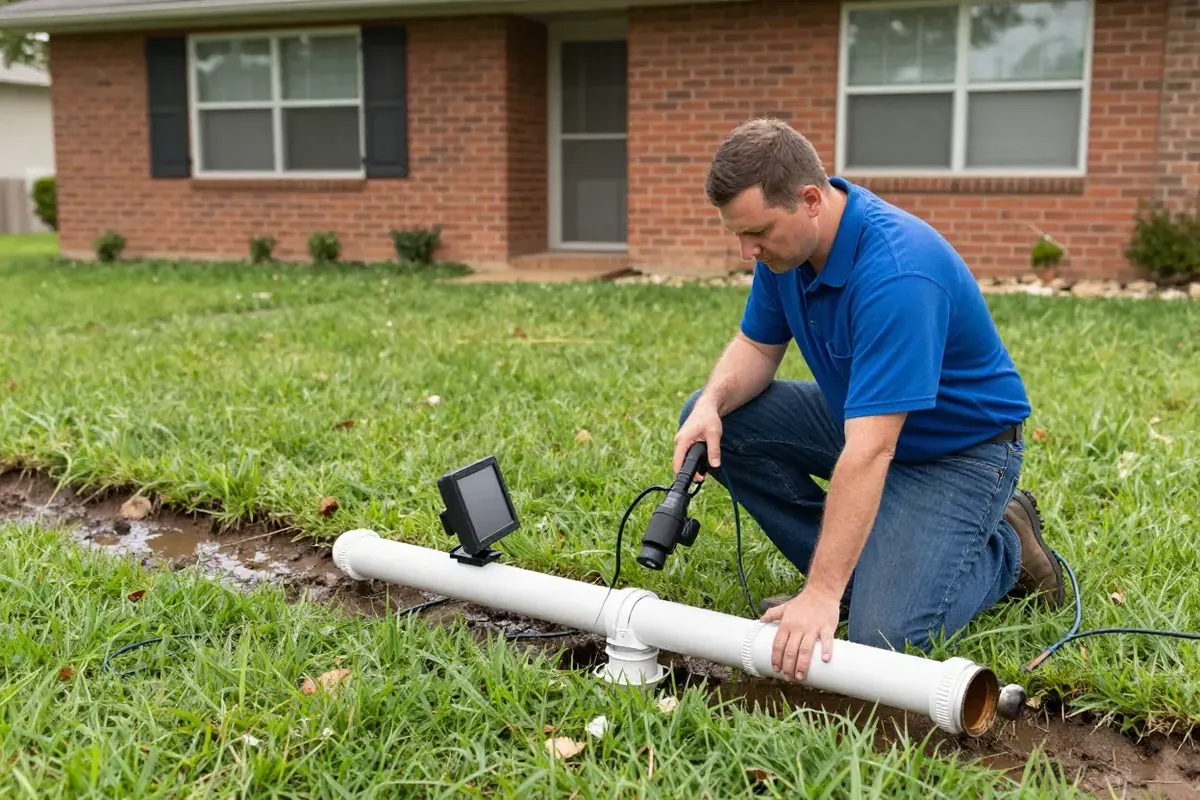
Sewer leaks
Green, soggy stripe in the lawn or a sewage smell by the cleanout? How a leaking sewer lateral is found and fixed in Arlington yards.
Arlington Leak Pros finds hidden slab, water line, pool and wall leaks without tearing up your home. Open 24/7.
(817) 285-5426