
Wall leaks
Water Leak in a Wall or Ceiling? Signs, Causes and Next Steps
Stains, bubbling paint and musty smells. How to tell if a pipe is leaking behind a wall or ceiling.
Leak detection
Acoustic microphones, thermal cameras, tracer gas and more. What each tool does and what to expect on a visit.
Leak detection is how a licensed plumber finds a hidden water leak without breaking open your floors, walls or yard. Instead of guessing, the technician uses tools that hear, see or trace the leak, then marks the spot within a foot or two. This guide explains each tool and what a visit looks like. Have a leak now? Call Arlington Leak Pros at (817) 285-5426, 24/7.
Water travels. A leak under a slab or behind a wall can show up feet away from the broken pipe. Cutting where the water appears often means cutting more than once. Finding the exact spot first keeps the opening small, which saves money on the repair and on patching floors, drywall and tile afterward.
In Arlington, most homes sit on concrete slabs over clay soil, so a wrong guess can mean breaking concrete in the wrong room. That is why we pinpoint first and cut second.
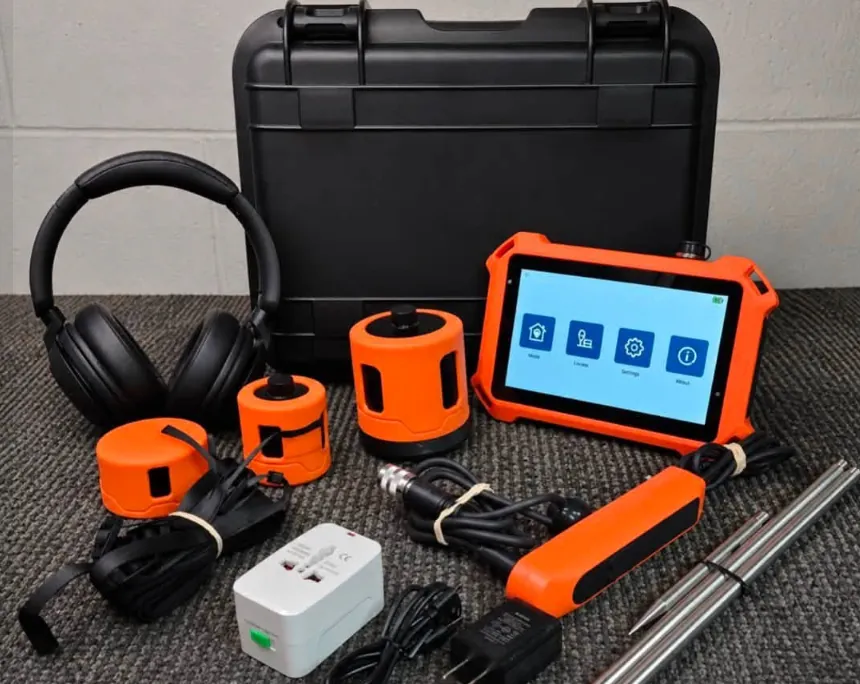
The main leak detection tools are acoustic listening devices, thermal imaging cameras, pressure test gauges, tracer gas, pipe locators, moisture meters and video pipe cameras. Each one answers a different question, so technicians usually combine two or three to confirm a leak before marking the spot.
| Tool | What it does |
|---|---|
| Pressure test gauges | Confirm which line is leaking (hot, cold, main, irrigation) |
| Pipe locator | Traces where a buried or under-slab pipe runs |
| Acoustic microphones | Hear water escaping through concrete and soil |
| Thermal camera | Shows heat from hot water leaks and cool, wet areas |
| Tracer gas | Rises through soil or slab to reveal tiny leaks |
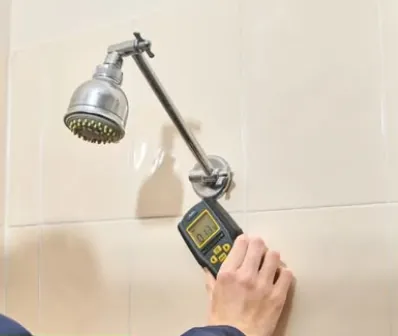
| Moisture meter | Measures how wet drywall, wood and flooring are |
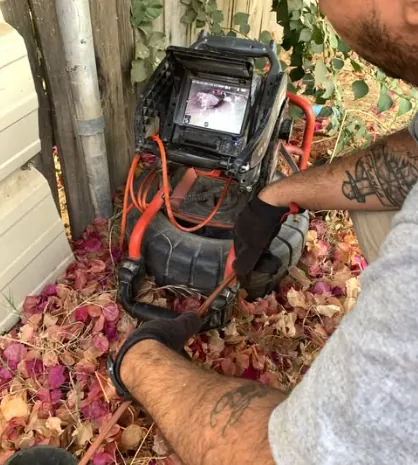
| Video pipe camera | Looks inside drain and sewer lines |
Water forced out of a pressurized pipe makes a hiss or rushing sound. An acoustic ground microphone picks up that sound through concrete or soil. The technician moves the sensor along the pipe's path and listens for the spot where the sound is loudest. That is usually where the leak is.
Quiet homes help. During a visit, we may ask you to turn off TVs, fans and appliances for a few minutes while we listen.
A thermal imaging camera shows temperature differences on a surface. A hot water leak under a floor shows up as a warm patch. Wet drywall often looks cooler than the dry wall around it. Thermal imaging is fast and does not touch anything, so it is great for scanning floors, walls and ceilings.
It works best on hot water lines. Cold water leaks are harder to see, which is why we pair the camera with acoustic gear and pressure tests.
Think you have a leak? A licensed Arlington technician answers 24/7.
Call Now (817) 285-5426Tracer gas is used for very small leaks that are too quiet to hear. The water line is drained and filled with a safe, non-toxic gas mix. The gas escapes at the leak and rises through soil or concrete, where a sensitive detector picks it up. It is common for underground and pool lines.
You can read more about buried lines in our guide to underground water line leaks.
A typical visit has five steps: the technician asks what you have noticed, checks the water meter, pressure tests to find which line is leaking, uses acoustic and thermal tools to pinpoint the spot, then marks it and explains repair options and price. Most visits take one to three hours.
Want to check for a leak before you call? Try the meter test in our guide to a high water bill.
Basic leak detection in Arlington usually costs about $150 to $400. Slab leak detection runs about $250 to $600, water line leak detection about $200 to $500, and pool or spa leak detection about $250 to $550. You get an exact price before any work begins.
See the full leak detection cost table on our homepage.
With the right tools and an experienced technician, most leaks can be marked within a foot or two. Accuracy depends on pipe depth, soil, background noise and leak size. Combining tools, such as a pressure test plus acoustic listening plus thermal imaging, is what makes the result reliable.
Yes. The tools are non-invasive. Acoustic gear and thermal cameras only listen and look. Tracer gas is a safe, non-toxic mix. Nothing is cut open until the leak is found and you approve the repair.
Yes. Cold water leaks give off no heat, so thermal cameras help less. Technicians rely on pressure tests, acoustic listening and sometimes tracer gas to pinpoint them.
Yes, an adult should be home to give access and hear the results. You will see where the leak is marked and get a price for the repair before any work begins.
Often, yes. After the leak is found, we explain repair options and the price. Small repairs can sometimes be done the same day. Larger ones, like a reroute, are scheduled.
Wall leaks
Stains, bubbling paint and musty smells. How to tell if a pipe is leaking behind a wall or ceiling.
Sewer lines
Slow drains, gurgling and sewer smells. What a camera inspection finds and when you need one.
Slab leaks
Warm floors, running-water sounds and high bills. How to tell if a pipe under your slab is leaking.
Arlington Leak Pros finds hidden slab, water line, pool and wall leaks without tearing up your home. Open 24/7.
(817) 285-5426