
Water line leaks
Water Leak Under the Driveway in Arlington: Causes, Tests and Costs
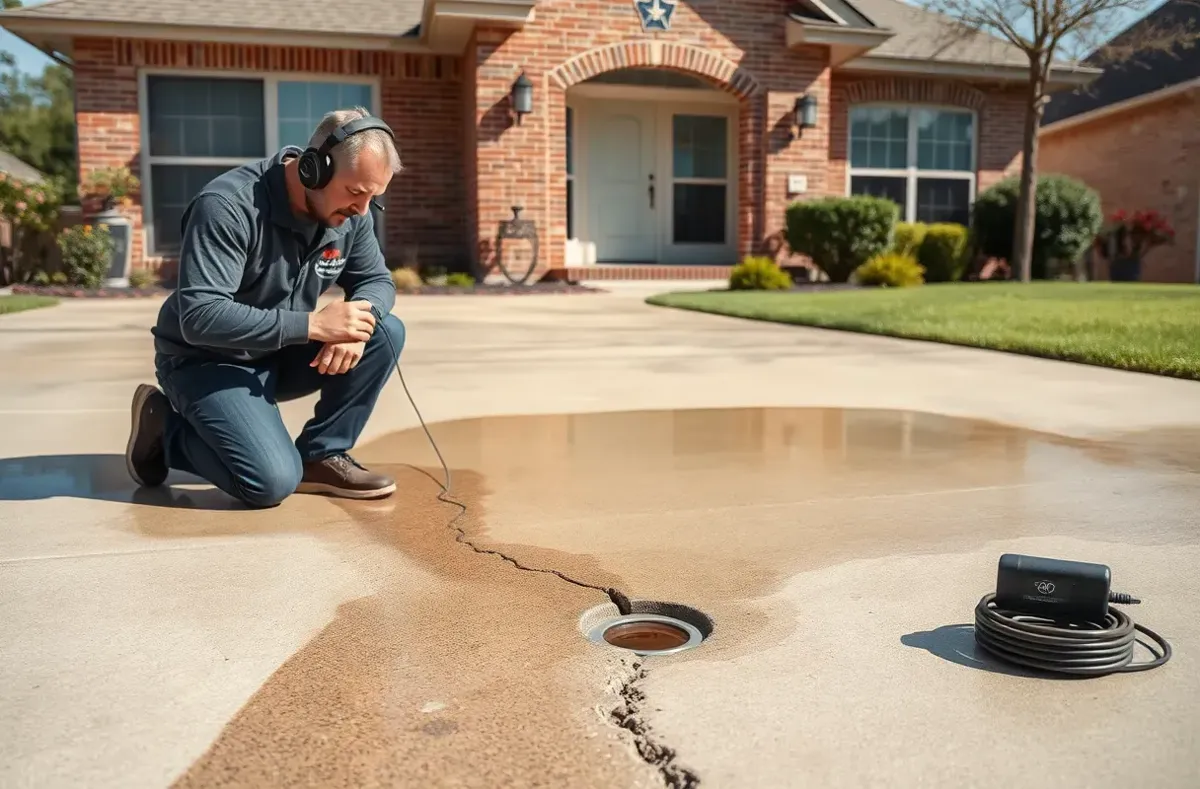
Water seeping through driveway cracks on a dry day usually means a buried line is leaking. How to test it and find it without tearing up concrete.
Sewer leaks
A strip of grass that stays green and soggy in August, a sewer smell by the cleanout, or a dip forming in the lawn between your house and the street can all mean the sewer line is leaking underground. In Arlington, clay soil, tree roots and older clay or cast iron pipe make yard sewer leaks common. Here is how to recognize one, how it is located without digging up the whole yard, and who pays to fix it.
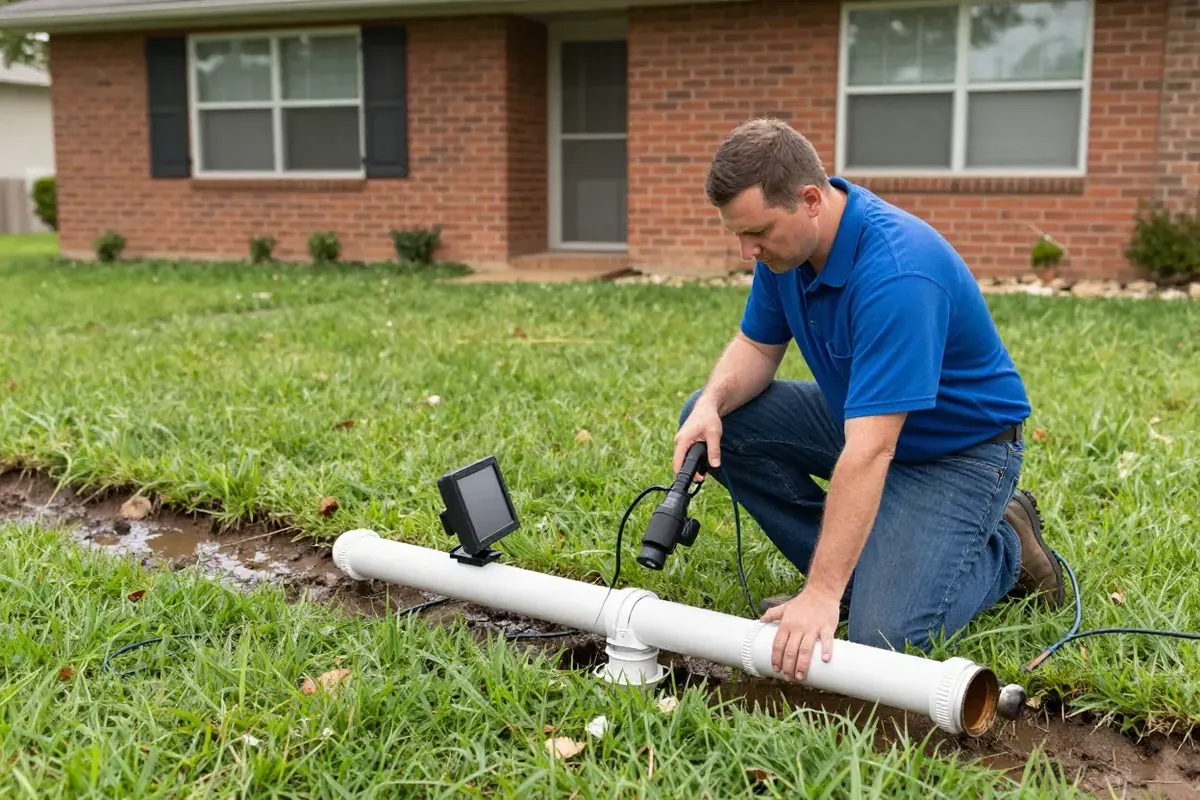
A sewer line leak in the yard usually shows up as a soggy or extra-green strip of lawn, a sewage smell outside, sinking soil or a slow drain that keeps coming back. Unlike a water line leak, it will not move your water meter. A sewer camera inspection, about $150 to $400 in Arlington, finds the crack, root intrusion or broken joint so only one small spot needs digging.
Your sewer lateral is the pipe that carries everything you flush and drain from the house to the city main, usually under the front yard. When that pipe cracks, separates at a joint or gets broken by roots, wastewater soaks into the soil instead of flowing to the street. It only leaks when you use water, so it is easy to miss for months.
Many Arlington homes built before the 1980s still have clay tile or cast iron laterals. Newer homes use PVC, which holds up better but can still crack where the soil moves. North Texas clay swells when it rains and shrinks in drought, and that push and pull is hard on underground pipe joints.
A sewer leak is different from a supply leak. The water line is under constant city pressure, so a leak there runs 24 hours a day and spins your meter. A sewer line is gravity fed and only carries water when a fixture drains. That is why the meter test that finds a waterline leak detection Arlington crews rely on will not catch a sewer leak.
The seven most common signs are a stripe of greener, faster-growing grass, a soggy patch that never dries, a sewage odor near the cleanout or yard, sinkholes or dips along the pipe path, slow drains or gurgling toilets, more rats or insects near the yard, and backups at the lowest drain in the house.
If the smell is inside the house instead, read our guide to a sewer smell in your Arlington house, because dry traps and vent problems cause that more often than a broken line.
Run three quick checks. Watch the water meter with every fixture off for 15 minutes; movement means a supply leak. Turn off the sprinkler controller for two days; if the spot dries, it was irrigation. If the meter is still and the spot stays wet, smells bad or gets wetter after laundry or showers, the sewer line is the likely source.
| What you notice | Most likely source |
|---|---|
| Meter moves with everything off | Water service line or a fixture |
| Spot dries when sprinklers are off | Irrigation line or head |
| Sewage odor, wetter after drain use | Sewer lateral |
| Clear water, no odor, meter still | Groundwater or a neighbor's line |
One simple home test: flush a toilet several times and run a full load of laundry, then check the wet spot 20 minutes later. If it grows or the smell gets stronger, wastewater is reaching it.
A technician runs a waterproof camera through the cleanout and records the inside of the pipe. The camera shows cracks, offset joints, roots and sags, and a locator above ground marks the exact spot and depth. For hidden leaks without visible damage, a hydrostatic or smoke test can confirm whether the line holds water.
Our full guide to sewer camera inspection covers what the video shows and how to read it.
A sewer camera inspection in Arlington usually costs about $150 to $400. Basic leak detection runs about $150 to $400 when the source is unclear. The repair is quoted after the camera shows the damage, because a single cracked joint, a root-damaged section and a collapsed pipe are very different jobs.
| Service | Typical cost in Arlington |
|---|---|
| Sewer camera inspection | $150 to $400 |
| Basic leak detection | $150 to $400 |
| Repair | Quoted after the defect is located |
The price depends on cleanout access, how long the line is and how many tests are needed. A clear cleanout near the street keeps it at the low end. A home with no cleanout, a long lateral or roots blocking the camera can push it higher.
The three common options are a spot repair, where one small section is dug up and replaced; a pipe liner, where a resin sleeve is cured inside the old pipe without digging a trench; and full replacement of the lateral. The camera report decides which one fits, based on how many defects there are and how much of the pipe is sound.
Pinpointing the leak first is what keeps the dig small. Without a camera, crews often dig a long trench just to find the problem.
The homeowner is normally responsible for the sewer lateral from the house to the connection at the city main or the property line cleanout. The City of Arlington handles the public main in the street or alley easement. If the break is at the city connection, call Arlington Water Utilities and share your camera video.
Homeowners insurance often excludes wear, roots and settling, but some policies or riders cover sudden sewer line breaks. Keep the video and the leak report in case you file a claim or need to show the city where the damage is.
Cut back on water use, especially laundry, long showers and the dishwasher, to keep wastewater out of the soil. Keep kids and pets away from the wet spot, because sewage carries bacteria. Do not use chemical drain cleaners, which can damage old pipe further, and schedule a camera inspection before the soil washes out under walks or the driveway.
Spread out laundry loads, fix running toilets and avoid the garbage disposal. If water backs up into the house, stop using every drain and call right away.
We have helped homeowners across Arlington, from Dalworthington Gardens and the older streets near UTA to newer homes in Viridian and Southeast Arlington, find leaks with the right tool for the job. Whether it is leak detection Arlington homeowners need under the slab or sewer leak detection in Arlington under the lawn, we locate the problem first so the repair stays small.
Look for a stripe of extra-green or soggy grass along the pipe path, a sewage smell near the cleanout, sinking soil, slow drains and gurgling. If your water meter does not move with everything off but the wet spot gets worse after laundry or showers, the sewer line is the likely source.
No. A sewer line only carries water when a fixture drains, and it is not under city pressure. A meter test finds supply line leaks, not sewer leaks. A sewer camera inspection is the way to find a sewer leak.
Most sewer camera inspections in Arlington cost about $150 to $400. The price depends on cleanout access, the length of the line and whether roots or debris must be cleared first.
Usually not. The camera and locator mark the exact spot and depth, so a spot repair only needs a small hole. Trenchless lining can repair a line with several cracks without a trench.
The homeowner is normally responsible for the lateral from the house to the city connection. The City of Arlington handles the public main. If the break is at the city connection, call Arlington Water Utilities with your camera video.
Water line leaks
Water seeping through driveway cracks on a dry day usually means a buried line is leaking. How to test it and find it without tearing up concrete.
Yard leaks
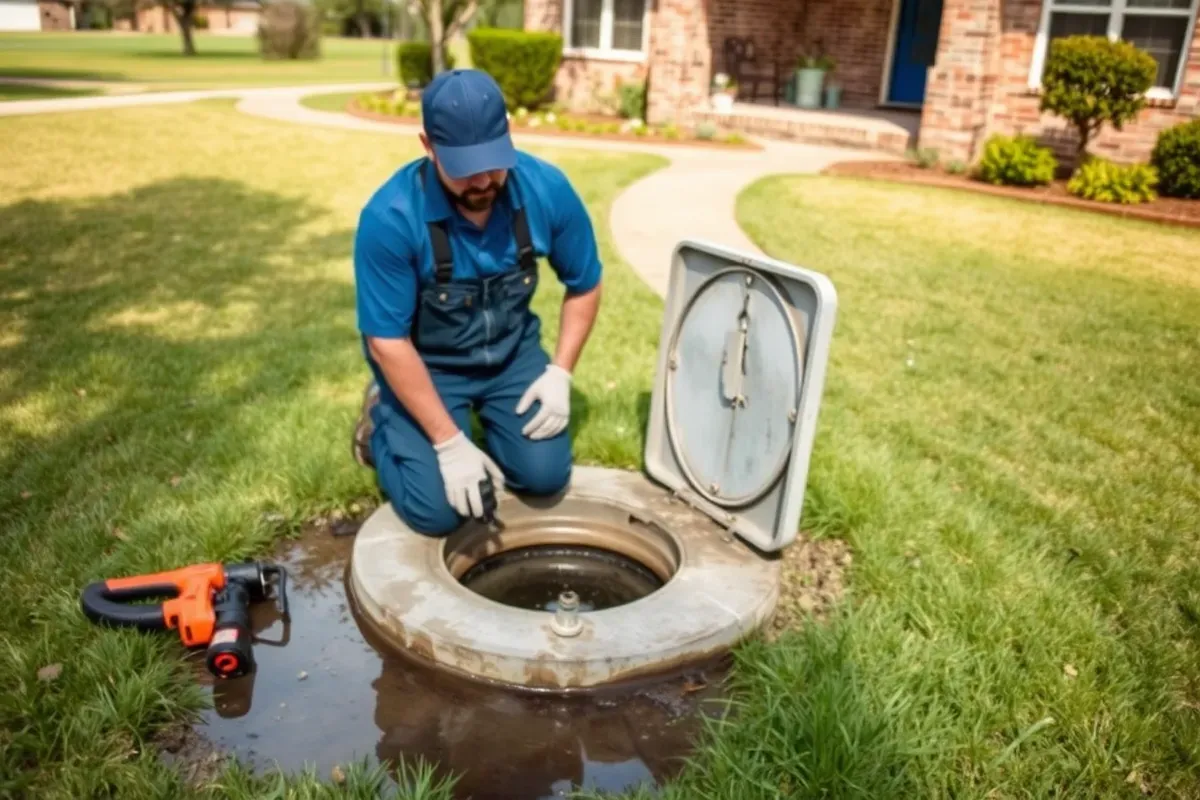
A wet spot near the property line could be your leak, your neighbor's or the city's. How to tell, who pays and how to prove it.
Wall leaks
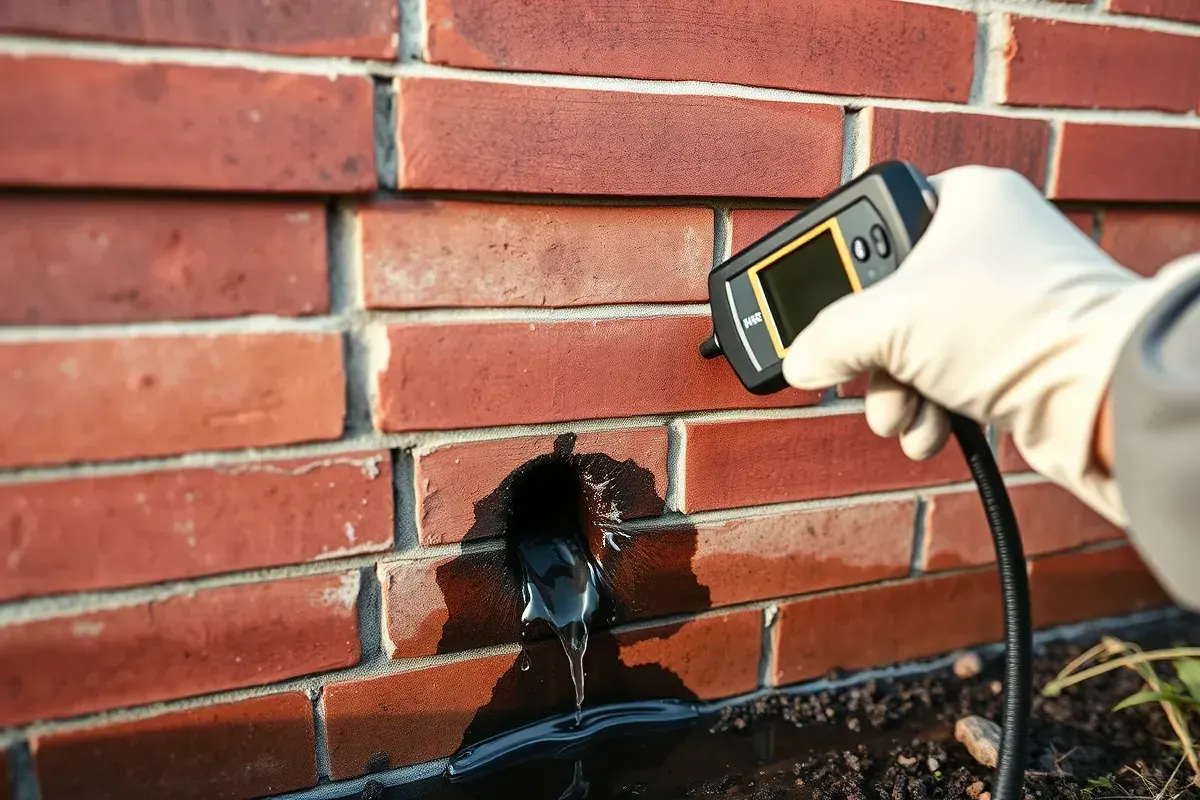
Water dripping from brick weep holes on a dry day can mean a hidden pipe leak inside the wall. How to tell, what to check and costs.
Arlington Leak Pros finds hidden slab, water line, pool and wall leaks without tearing up your home. Open 24/7.
(817) 285-5426