
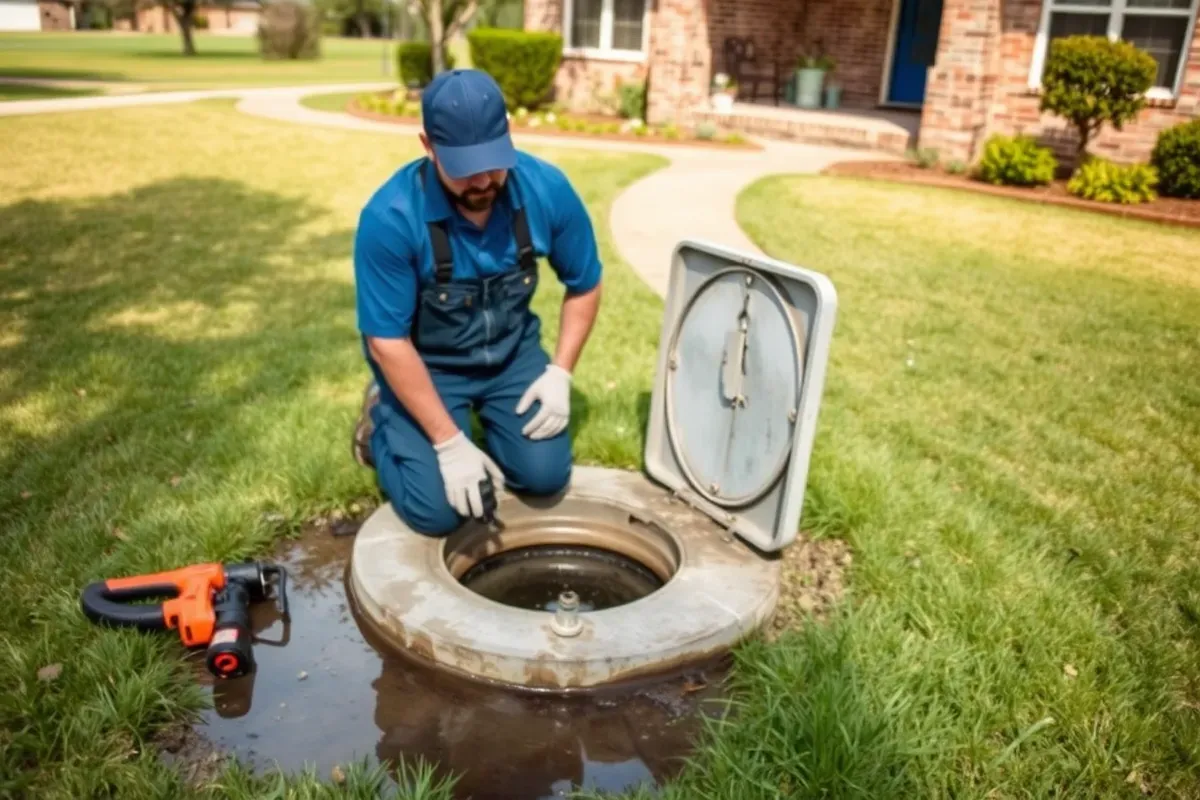
Yard leaks
Water Leaking Into Your Yard From a Neighbor in Arlington: Whose Leak Is It?
A wet spot near the property line could be your leak, your neighbor's or the city's. How to tell, who pays and how to prove it.
Water line leaks
A damp crack in the driveway that never dries, water bubbling up at a seam, or a slab of concrete that has started to lift are all signs of water under the pavement. In Arlington, the most common cause is a leaking water service line that runs under the drive between the meter and the house. Here is how to check it, what else it can be, and how a leak gets found without breaking up your whole driveway.
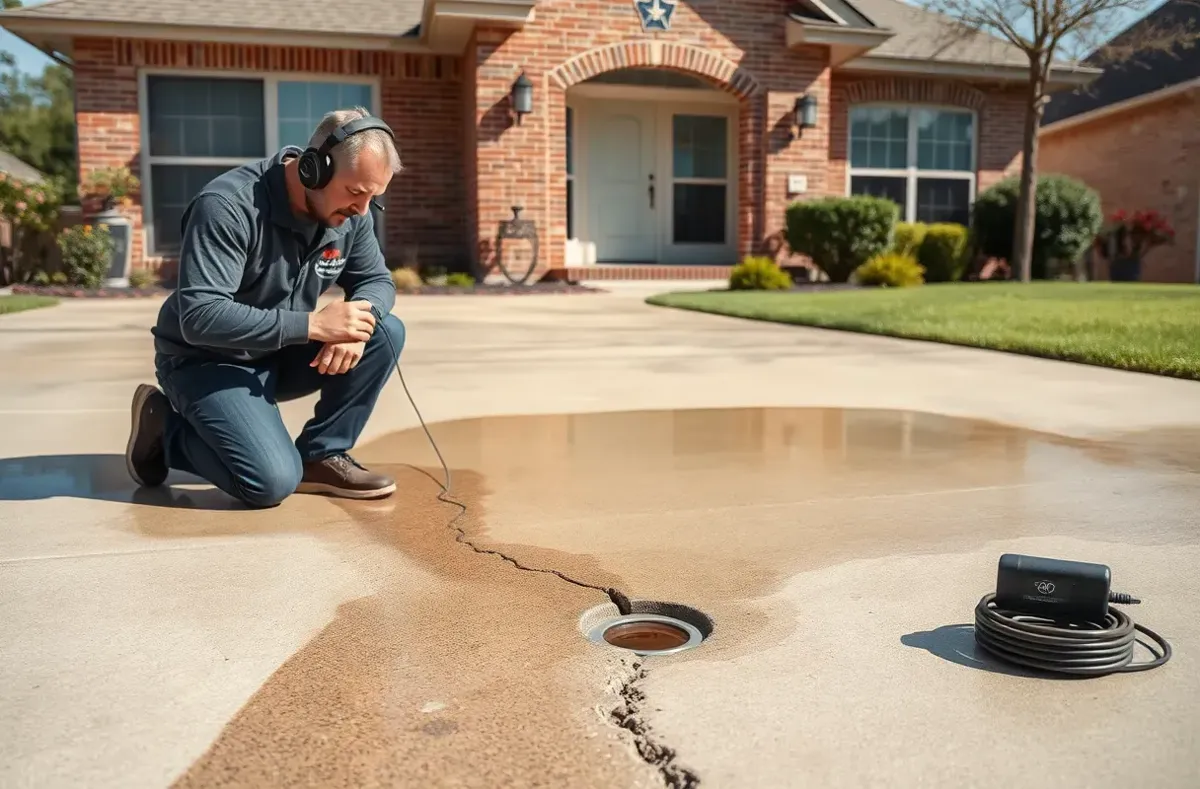
If water keeps seeping from driveway cracks when it has not rained and the sprinklers are off, the most likely cause is your water service line. Turn off every fixture and watch your meter for 15 minutes. If the leak indicator moves, you have a pressurized leak. Water line leak detection in Arlington costs about $200 to $500 and pinpoints the spot before anyone cuts concrete.
Many Arlington homes built from the 1970s through the 1990s have the service line running straight under the driveway from a meter at the curb. When that pipe cracks, the water has nowhere to go but up through joints and cracks. If water is flowing now, (817) 285-5426.
The usual causes are a cracked or corroded water service line, a leaking fitting at the meter, an irrigation line run under the drive, a broken sewer lateral, or surface water trapped under the slab. A supply line leak is the most common and the most urgent, because it runs under full city pressure all day and night.
| Cause | What you notice | Urgency |
|---|---|---|
| Water service line leak | Clear water, wet even on dry days, meter moving | High |
| Sprinkler line under the drive | Wet only when a zone runs | Medium |
| Sewer line crack | Odor, gray water, slow drains inside | High |
| Meter or curb stop fitting | Wet near the curb end of the drive | Medium to high |
| Rain or runoff under the slab | Only after storms, dries in a day or two | Low |
Arlington's expansive clay soil makes this worse. When the soil gets wet it swells and lifts the concrete. When it dries it shrinks and leaves voids. A steady leak keeps that cycle going, which is why cracks often widen fast.
Use the meter test. Shut off every faucet, toilet, the ice maker and the sprinkler controller. Read the meter, wait 15 minutes, and read it again. Any movement on the leak dial or a change in the reading means water is leaving the system somewhere. Then close the house shutoff valve and test again to split the line in half.
If the meter only moves when the house valve is open, the leak is inside the home, and you may be looking at a slab leak instead. Our guide to a leak detection Arlington visit explains how that is traced.
A technician traces the pipe route with a line locator, then listens along it with acoustic ground microphones. Pressurized water makes a hissing sound that is loudest right above the break. On quiet or deep lines, a tracer gas test can confirm the spot. The goal is one small, marked repair point, not a trench the length of the driveway.
We cover the full method in our page on waterline leak detection Arlington homeowners use for yard and buried lines.
Smell is the quickest clue. A water supply leak is clear and odorless and runs nonstop. A sewer leak is gray or dark, may smell, and gets worse when you run the washer, shower or dishwasher. If your meter is still but the driveway gets wetter after heavy water use inside, suspect the sewer lateral and ask for a camera inspection.
Sewer problems under concrete are often linked to the house slab as well. Read our post on a sewer leak under house foundations for the signs to watch for indoors.
Finding the leak is the first, smaller cost. In Arlington, water line leak detection runs about $200 to $500 and basic leak detection about $150 to $400. The repair price depends on where the leak is, how deep the line sits and whether a reroute around the driveway makes more sense than cutting concrete. You get the repair quote after the leak is located.
| Service | Approx. cost in Arlington |
|---|---|
| Basic leak detection | $150 to $400 |
| Water line leak detection | $200 to $500 |
| Sewer camera inspection | $150 to $400 |
| Slab leak detection | $250 to $600 |
Precise location saves money. Cutting a two-foot square of concrete is a very different job from breaking out a full panel. If the line is old galvanized or polybutylene pipe, a new line routed around the driveway may be the better long-term fix. See our water line replacement guide for that choice.
If the leak is on the house side of the meter, the homeowner usually pays, and that includes the line under your driveway. If the leak is at the main, the curb stop or the street side of the meter, the City of Arlington typically handles it. Call Arlington Water Utilities first if water is coming up near the meter box or the street.
Keep your meter photos and a copy of the leak detection report. They help if you ask the city for a leak adjustment on your bill, and they help with insurance questions if water has reached your garage or foundation.
If the meter is moving fast or water is pooling, close the main shutoff at the house to protect the home, and use the curb valve only if you know how. Keep cars off any concrete that has lifted or sounds hollow. Do not drill or pour sealant into the cracks, because that hides the source without stopping the water.
A leak under concrete does not fix itself, and every day it runs it washes out more soil. Schedule water line leak detection in Arlington and we will mark the exact spot so the repair stays small.
The most common cause is a leak in the water service line that runs under the driveway from the meter to the house. A sprinkler line, a sewer lateral or a meter fitting can also leak there. A 15-minute meter test tells you if it is a pressurized supply leak.
Yes. Arlington's clay soil swells when wet and shrinks when dry. A steady leak near the house can move the soil under the slab and cause cracks. It can also wash out soil under the driveway and leave hollow spots.
Usually not. Acoustic listening and line tracing find the leak to within a small area, so only a small section of concrete is cut. In some cases a new line is rerouted around the driveway instead.
Water line leak detection costs about $200 to $500 in Arlington. Basic leak detection runs about $150 to $400. The repair is quoted after the exact spot is found.
If the leak is between the meter and the house, it is normally the homeowner's line. Leaks at the main or on the street side of the meter are typically handled by the City of Arlington.
Yard leaks
A wet spot near the property line could be your leak, your neighbor's or the city's. How to tell, who pays and how to prove it.
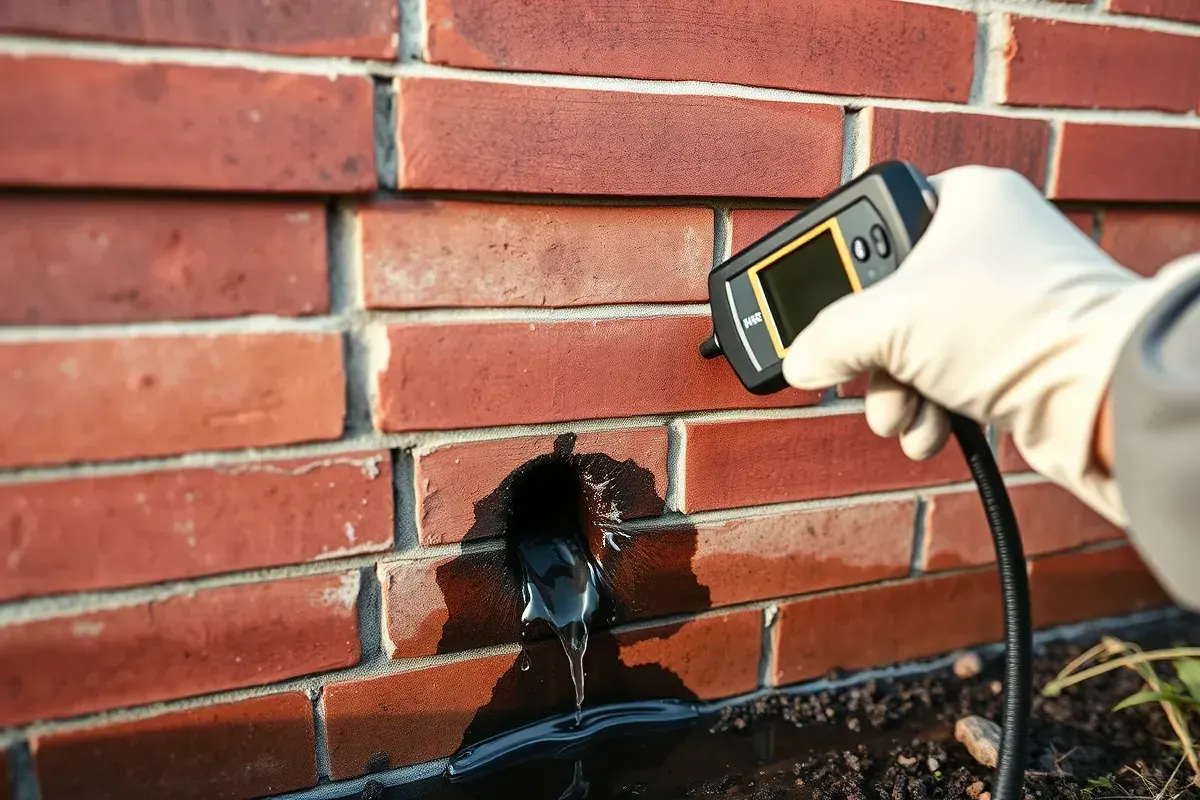
Wall leaks
Water dripping from brick weep holes on a dry day can mean a hidden pipe leak inside the wall. How to tell, what to check and costs.
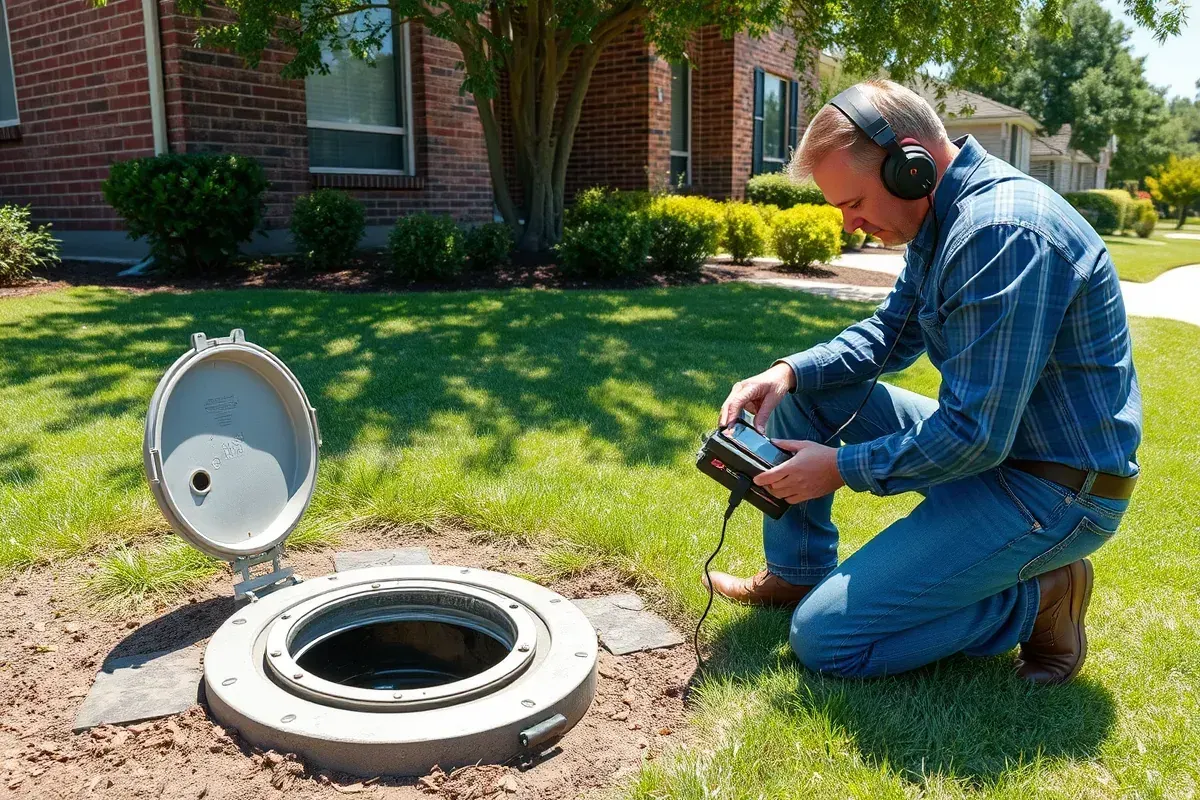
Pipe leaks
Older Arlington homes can still have galvanized steel pipes. The signs they are failing, how leaks are found and repair versus repipe.
Arlington Leak Pros finds hidden slab, water line, pool and wall leaks without tearing up your home. Open 24/7.
(817) 285-5426