
Slab leaks
Selling a House With a Slab Leak in Arlington: Fix It, Disclose It or Credit It?
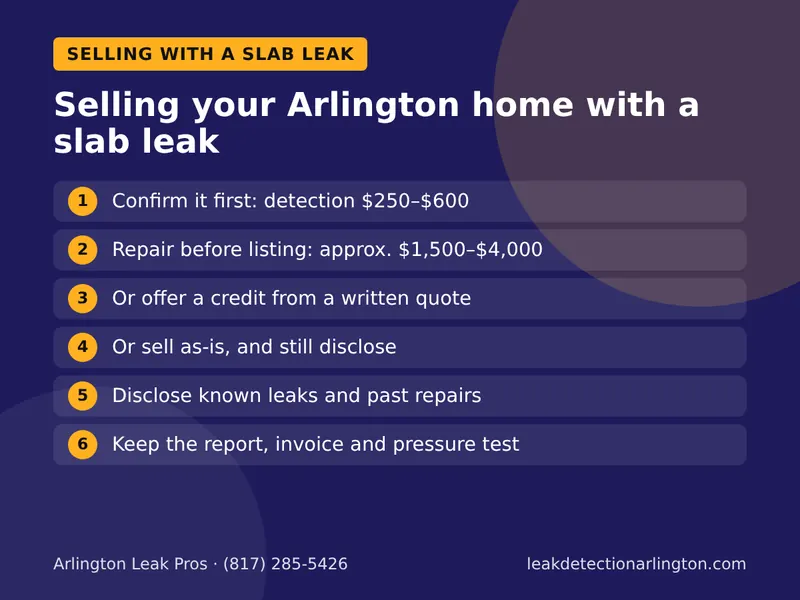
A slab leak does not have to kill a sale. Your options, what Texas sellers disclose and the paperwork that keeps a buyer calm.
Pipe leaks
If your Arlington home was built before the 1970s, some of its water pipes may be galvanized steel. These pipes rust from the inside out. For years they just lower your water pressure. Then one day a joint starts to drip inside a wall, under the house or in the yard. Here is how to tell if galvanized pipe is your problem, how the leak gets found, and what your options are.
Galvanized steel pipes were common in homes built before about 1970. They corrode inside, so water pressure drops, water turns brown and threaded joints start to leak. If you see rust-colored water, weak flow or a damp spot near old pipe, have the leak found before you open walls. Leak detection costs about $150 to $600, depending on where the pipe runs.
Many homes near downtown Arlington, UT Arlington, Pantego and the older streets around Lake Arlington were built in the 1950s and 1960s. Some still have original galvanized lines, or a mix of galvanized and newer copper or PEX after past repairs. If you think you have a leak now, (817) 285-5426.
Look where the main line enters the house, at the water heater and under sinks. Galvanized pipe is dull gray steel with threaded fittings. A magnet sticks to it firmly, and scratching it with a key shows silver-gray metal, not copper. Copper is reddish and soldered, PEX is plastic tubing, and polybutylene is usually gray plastic.
| Pipe type | How it looks | Magnet test |
|---|---|---|
| Galvanized steel | Dull gray, threaded joints | Sticks firmly |
| Copper | Reddish brown, soldered joints | Does not stick |
| PEX | Red, blue or white plastic tubing | Does not stick |
| Polybutylene | Gray (sometimes blue) plastic | Does not stick |
Do not judge by one visible pipe. Past owners often replaced the easy-to-reach sections with copper and left galvanized pipe inside walls or under the slab.
The six common signs are brown or rusty water after the tap sits, low pressure that keeps getting worse, a hot or cold side that runs weaker than the other, damp spots or stains near pipe runs, a water meter that moves with every tap off, and leaks at threaded joints or where galvanized meets copper.
A sudden jump in your bill is often the first clue. Our guide to water leak detection arlington homeowners use explains how to read the meter.
Think you have a leak? A licensed Arlington technician answers 24/7.
Call Now (817) 285-5426The zinc coating that protects galvanized steel wears away after a few decades. Then the steel underneath rusts from the inside. Threaded joints are the weak points because the threads cut into the pipe wall, leaving less metal. Arlington's hard water and the clay soil that shifts around buried lines speed up the wear.
Underground sections fail the same way. If the leak is between the meter and the house, our guide to waterline leak detection arlington shows what that looks like in the yard.
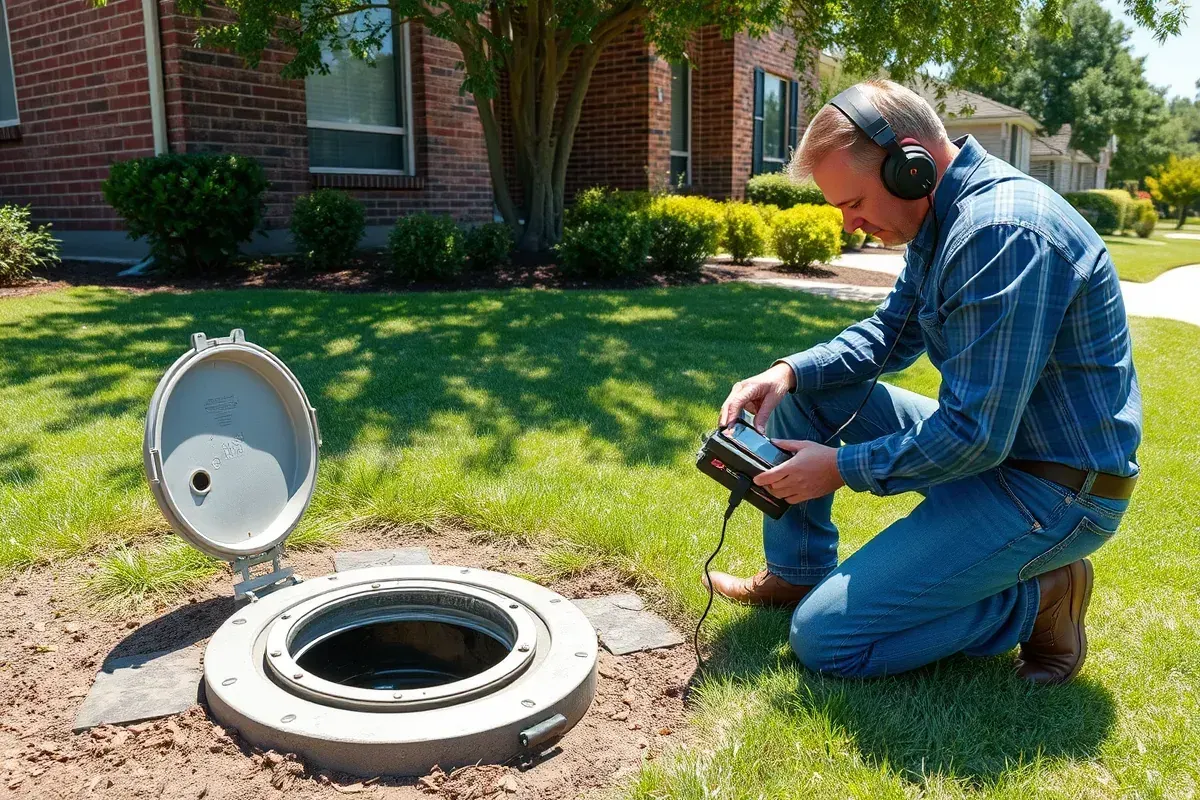
A technician first checks the meter to confirm a leak and isolates the house from the yard line. Then they pressure-test each section, listen along the pipe with acoustic ground mics, and use thermal imaging to find warm or wet spots inside walls and floors. The goal is to mark the leak so only one small opening is needed.
If your home is on a slab and the leak is under the floor, it is the same process our slab leak detection in Arlington visits use. To see what happens on the day, read about a leak detection arlington visit.
A single leak in an otherwise good system can be repaired. But galvanized pipe tends to fail in many places at once. If you have rusty water, low pressure in several rooms, or a second leak within a year, replacing the old galvanized sections is usually the better long-term choice. A plumber can quote both options.
| Situation | Usually makes sense |
|---|---|
| One leak, good pressure, clear water | Spot repair of that section |
| Leak plus rusty water or weak flow | Replace the galvanized runs |
| Second or third leak in a short time | Repipe the old sections |
| Leak in the buried yard line | Replace the line from meter to house |
| Selling the home soon | Repair and document, or get a repipe quote for buyers |
Finding the leak usually costs about $150 to $400 for a basic visit, $200 to $500 for a buried water line and $250 to $600 if the leak is under the slab. A spot repair through the slab is about $1,500 to $4,000. Repiping costs depend on the home and are quoted by the plumber.
| Service | Approx. cost |
|---|---|
| Basic leak detection | $150 – $400 |
| Water line leak detection | $200 – $500 |
| Slab leak detection | $250 – $600 |
| Slab leak spot repair | $1,500 – $4,000 |
A written leak report helps with insurance and with plumber quotes. Many insurance policies cover the water damage from a sudden leak but not the old pipe itself.
Turn off the water at the main shut-off if you see active leaking, and open a faucet to drain pressure. Run a tap until rusty water clears before you drink or cook with it. Take photos of stains and wet areas. Then book leak detection so the repair is made in the right spot the first time.
We serve older and newer homes across the city, including the 76010, 76012, 76013 and 76015 ZIP codes. For a same-day visit, our leak detection Arlington TX team answers 24/7.
Galvanized steel pipes usually last about 40 to 60 years. Most homes that still have them are past that range, so rust, low pressure and leaks are common. Hard water and buried sections tend to fail sooner.
Rust itself is mostly a taste and staining problem, but old galvanized pipe can hold lead from past solder or service lines. Run the tap until the water clears, and consider a water test if your home is older.
Yes. A plumber can cut out the leaking section and replace it with copper or PEX using the right fittings. If the rest of the pipe is badly corroded, more leaks are likely soon, so ask about replacing the old runs.
Many policies cover sudden water damage from a burst or leaking pipe, but not replacing old, worn-out pipe. Some insurers ask about galvanized plumbing before they write a policy. A leak report helps with any claim.
Watch for stains, bubbling paint and a musty smell, and check the meter with all taps off. A leak detection pro can confirm the spot with pressure tests, acoustic listening and thermal imaging before any drywall is cut.
Slab leaks
A slab leak does not have to kill a sale. Your options, what Texas sellers disclose and the paperwork that keeps a buyer calm.
Slab leaks
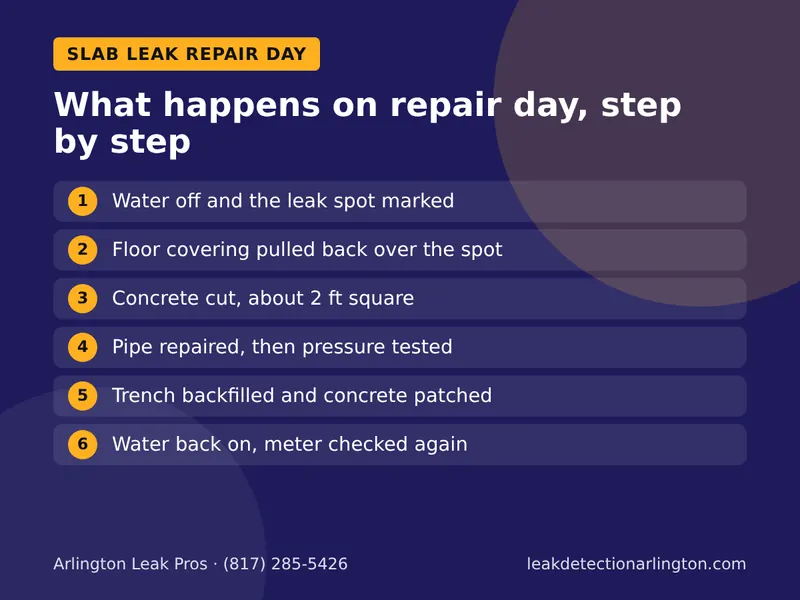
The leak is found. Now what? A step-by-step look at slab leak repair day, from shut-off to concrete patch.
Slab leaks
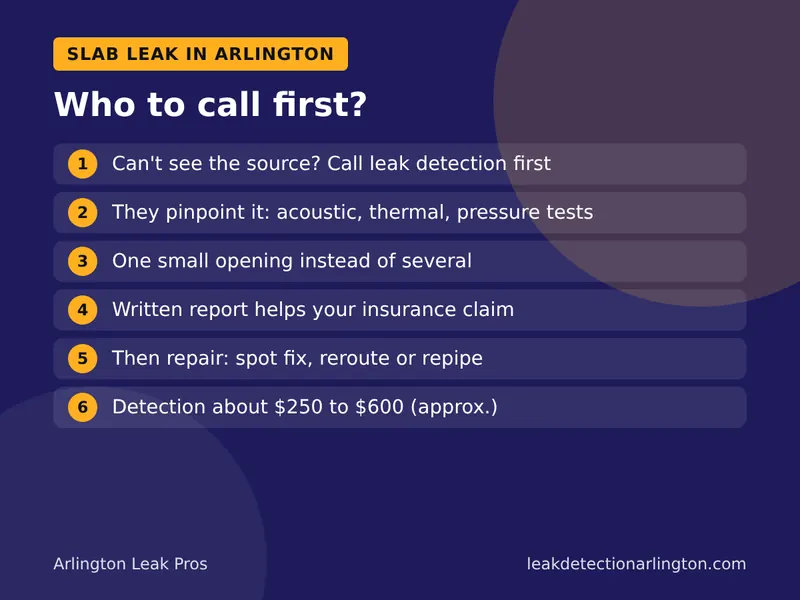
A slab leak needs two jobs: finding it and fixing it. Who to call first, and why the order changes your bill.
Arlington Leak Pros finds hidden slab, water line, pool and wall leaks without tearing up your home. Open 24/7.
(817) 285-5426