
Pipe leaks
Galvanized Pipe Leaks in Older Arlington Homes: Signs, Testing and Your Options
Older Arlington homes can still have galvanized steel pipes. The signs they are failing, how leaks are found and repair versus repipe.
Wall leaks
Weep holes are the small gaps left at the bottom of a brick wall. They are meant to let a little moisture out. But steady water from them, especially on a dry day, is a warning sign. It can mean a pipe is leaking inside the wall behind the brick. Here is how to tell rainwater from a plumbing leak, what to check yourself, and when to call for leak detection.
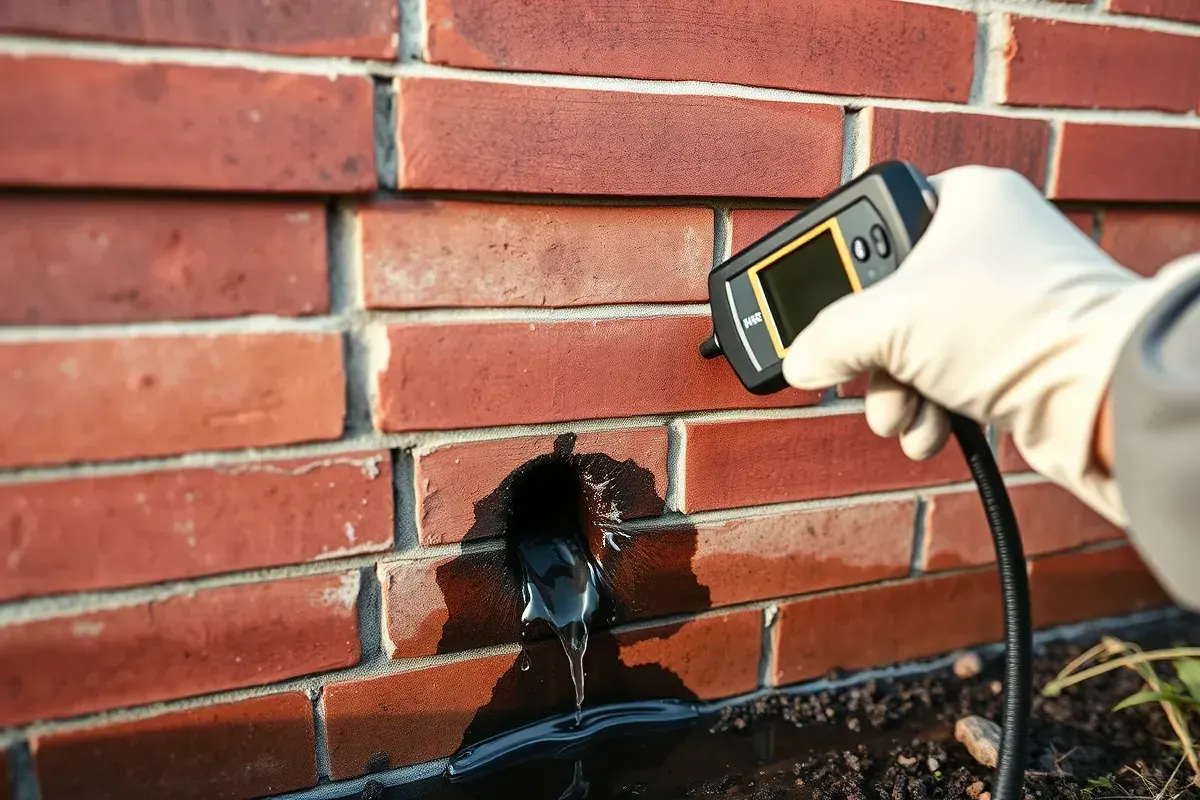
A little water from weep holes after a hard rain is normal. Water that drips for days after the rain stops, flows on a dry day, or shows up near a bathroom, kitchen or hose bib usually means a plumbing leak inside the wall. Check your water meter with every tap off. If it moves, call for leak detection, which costs about $150 to $400 for a basic visit.
Most homes in Arlington are brick veneer over a wood frame, from the 1970s homes around Pantego and Dalworthington Gardens to newer builds in Viridian and southeast Arlington. Behind the brick is an air gap, and weep holes at the bottom drain that gap. When a pipe leaks inside an outside wall, the water often finds the weep holes first. If you see water now, (817) 285-5426.
Weep holes are small openings, usually every few feet along the bottom row of brick and above windows and doors. Brick soaks up rain, and some water runs down the back of the brick. A flashing at the base sends that water out through the weep holes. They also let the wall cavity breathe so it can dry.
That means weep holes are supposed to let some water out. The question is how much, when, and where. A damp streak after a North Texas thunderstorm is the system working. Steady water is not.
Rainwater stops within a day or two after the rain ends, shows up on the side of the house the storm hit, and comes from many weep holes. A plumbing leak keeps flowing on dry days, comes from one or two holes, often sits below a bathroom, kitchen, laundry or hose bib, and makes your water meter move with every tap off.
| Clue | Points to rain | Points to a plumbing leak |
|---|---|---|
| Timing | Only during or right after rain | Keeps dripping on dry days |
| Location | Many holes on the storm side | One or two holes, below plumbing |
| Water meter | Still with all taps off | Leak indicator moves |
| Temperature | Outdoor temperature | Warm water can mean a hot line leak |
| Inside the house | Usually no signs | Damp baseboard, stains, musty smell |
A rising water bill is another strong clue. Our guide to water leak detection arlington homeowners use shows how to read the meter and the bill.
Think you have a leak? A licensed Arlington technician answers 24/7.
Call Now (817) 285-5426You can narrow it down in about 30 minutes. Do a meter test, look at what sits on the other side of the wet wall, check the hose bib and any sprinkler heads nearby, and run water in one fixture at a time while someone watches the weep hole. Do not drill or open the wall yet.
A drip from an outdoor faucet is common in older homes; see hose bib leaks for that case.
The common sources are a cracked frost-free hose bib, a leaking shower or tub valve on an outside wall, a supply line or drain under a kitchen or bathroom sink, a washer box leak, and a water heater or its lines in a garage that shares a brick wall. Less often, a slab leak near the edge of the foundation pushes water out at the base of the brick.
If the leak turns out to be under the floor, the process is the same as a leak detection arlington slab visit. If the water seems to come from the yard side, our guide to waterline leak detection arlington explains how buried line leaks show up.
A technician uses non-invasive tools. Thermal imaging shows wet or warm areas on the inside wall. Moisture meters map how far the water has spread. Pressure tests isolate the hot side, the cold side and each branch. Acoustic listening finds the exact spot on pressurized lines. Then only a small opening is made from the inside, not the brick side.
Opening drywall from the inside is far cheaper than removing brick. A good locate means one small hole in the right place, and a written report you can give your plumber and insurer.
A basic leak detection visit in Arlington costs about $150 to $400. If the leak is under the slab, slab leak detection runs about $250 to $600. Water line detection is about $200 to $500. The repair itself is priced separately once the leak is found, and is often a small fix for a hose bib, valve or sink line.
| Service | Approx. cost |
|---|---|
| Basic leak detection | $150 – $400 |
| Slab leak detection | $250 – $600 |
| Water line leak detection | $200 – $500 |
| Slab leak spot repair | $1,500 – $4,000 |
Prices are estimates and depend on the home and the leak. You get a quote before work starts.
A hidden leak inside an exterior wall soaks the wood framing, sheathing and insulation. Over weeks, that leads to rot, mold, termites drawn to wet wood, and damaged drywall inside. Water that reaches the slab edge can also add to foundation movement in Arlington's expansive clay soil. Finding it early keeps the fix small.
Not sure where to start? Book leak detection Arlington TX homeowners call 24/7, and we will find the source before anything is opened.
Some water after a heavy rain is normal, because weep holes drain the space behind the brick. Water that keeps coming out on dry days, or only from one or two holes, usually points to a plumbing leak inside the wall.
No. Sealing weep holes traps water behind the brick and can cause rot and mold. If water is coming out, find the source instead. Weep screens that keep bugs out but let water drain are fine.
Do a meter test with all taps off, look for damp baseboards or stains inside that wall, and note whether water flows from the weep hole on dry days. A leak detection pro can confirm it with thermal imaging and pressure tests.
Yes, sometimes. A slab leak near the edge of the foundation can push water out at the bottom of the brick. Warm water at the base of the wall can point to a hot water slab leak.
A basic leak detection visit costs about $150 to $400. Slab leak detection is about $250 to $600, and water line detection about $200 to $500. The repair is quoted after the leak is found.
Pipe leaks
Older Arlington homes can still have galvanized steel pipes. The signs they are failing, how leaks are found and repair versus repipe.

Slab leaks
A slab leak does not have to kill a sale. Your options, what Texas sellers disclose and the paperwork that keeps a buyer calm.
Slab leaks
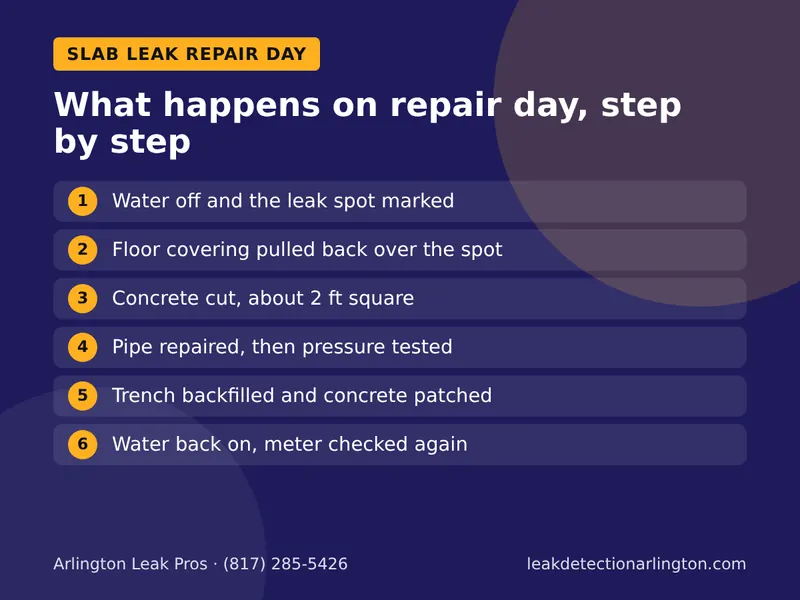
The leak is found. Now what? A step-by-step look at slab leak repair day, from shut-off to concrete patch.
Arlington Leak Pros finds hidden slab, water line, pool and wall leaks without tearing up your home. Open 24/7.
(817) 285-5426