
Slab Leaks
Slab Leak Reroute vs Spot Repair: Which Is Right for Your Arlington Home?
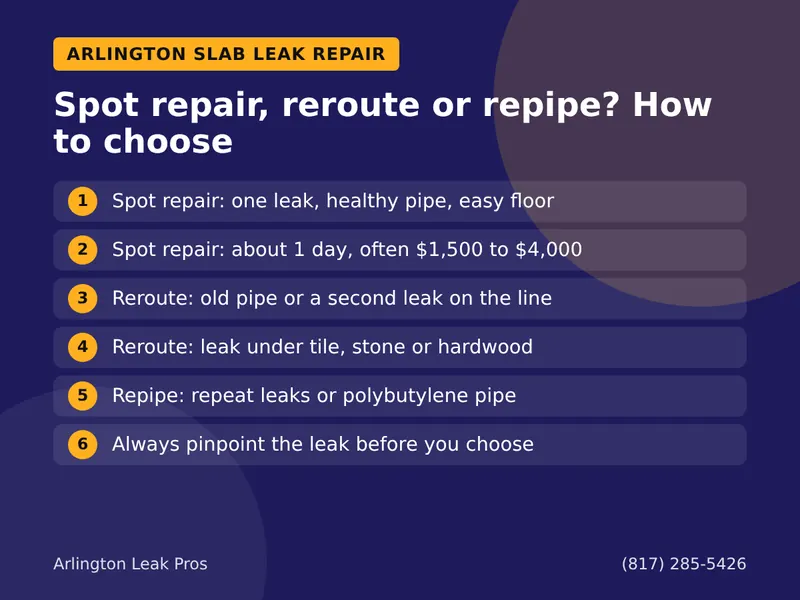
Spot repair, reroute or repipe? How each slab leak fix works, what it costs and when it makes sense.
Insurance
Your floor is wet, the water bill doubled, or a stain is spreading. Before your insurance company pays for anything, someone has to show where the water came from and how long it has been leaking. A clear leak detection report does that, and it is often the difference between a smooth claim and a long argument.
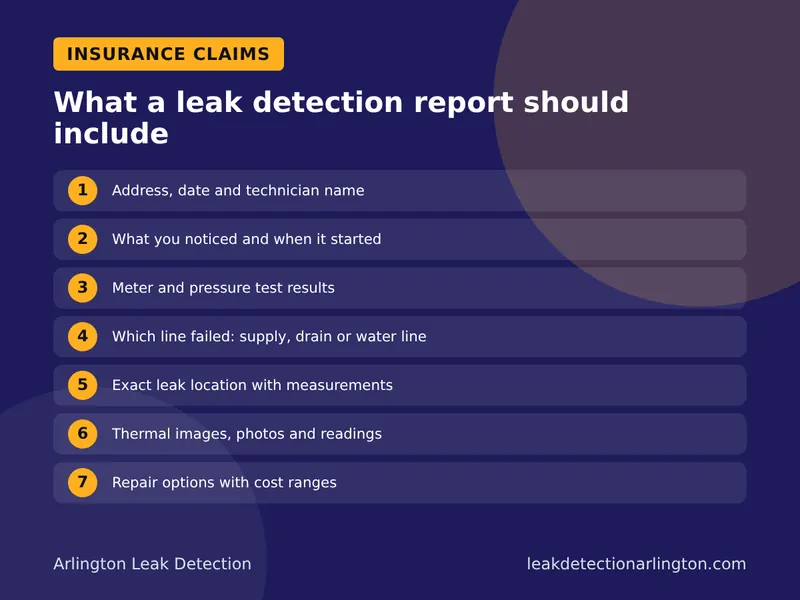
A leak detection report is a written record from the technician who found your leak. It names the exact location, the pipe or fixture that failed, how it was found, and photos and readings that back it up. Insurers use it to decide if the loss was sudden or gradual and what part of the house is covered. Call (817) 285-5426 to book a visit with a report.
Our leak detection Arlington TX technicians write a report after every visit, with thermal images, moisture readings and pressure test results, so you can hand it straight to your adjuster.
Most Texas homeowners policies cover sudden water damage but not leaks that went on for months or the cost to fix a worn-out pipe. The adjuster needs proof of what failed, where, and roughly when. A report from the company that found the leak answers those questions in writing, with photos and test results instead of guesses.
Without one, the adjuster may only see a wet floor and a high water bill. That leaves room to call the damage "long-term seepage" or deny the tear-out needed to reach a slab leak. Our guide on whether insurance covers water leaks in Texas explains the usual coverage lines.
A useful report is specific and backed by evidence. It should list your address and date, the leak's exact location on a floor plan or photo, the line that failed, the test methods used, the readings found, and the repair options. Vague wording like "possible leak in kitchen area" does not help a claim.
Adjusters want to see the damage, the source and the scale. Take your own photos before anything is moved or cut, and keep the technician's images too. Wide shots show the room. Close shots show the stain, the swelling or the wet line. Time-stamped photos from your phone are fine.
Keep the failed section of pipe if you can. A pinhole or split in copper is strong proof of a sudden failure.
In Arlington, basic leak detection runs about $150 to $400 and a slab leak search runs about $250 to $600. Water line leak detection is about $200 to $500, and pool or spa work about $250 to $550. A written report is part of the visit. Some policies reimburse the detection cost as part of a covered claim.
| Service | Approx. cost in Arlington |
|---|---|
| Basic leak detection | $150 – $400 |
| Slab leak detection | $250 – $600 |
| Water line leak detection | $200 – $500 |
| Pool or spa leak detection | $250 – $550 |
| Sewer camera inspection | $150 – $400 |
| Slab leak spot repair | $1,500 – $4,000 |
Find out what happens on a typical visit in our guide to leak detection arlington homeowners book for slab leaks.
Stop the water, record everything, call your insurer to open a claim, and book leak detection quickly. Most policies require you to prevent more damage, so do not wait days for the adjuster before acting. Keep every receipt for drying, detection and emergency repairs, because those are often part of the claim.
Yes. Slab leaks, water line leaks and pool leaks are often treated differently. Many policies pay to tear out and replace the floor to reach a slab leak but not for the pipe repair itself. Leaks in the yard line or a pool are often excluded. The report's description of which line failed shapes how the adjuster reads your policy.
Arlington's clay soil swells in wet springs and shrinks in dry summers. That movement stresses pipes under slabs all over Arlington, from the older homes near Randol Mill Road to the enclaves of Pantego and Dalworthington Gardens. A report that ties a sudden failure to that movement can help show the leak was not years of neglect.
It is a written record from the company that found your leak. It lists the exact location, the line that failed, how it was found, the test results, photos and thermal images, and the repair options.
It is not always required, but it helps a lot. It shows the adjuster what failed and where, which supports a claim for sudden damage and the tear-out needed to reach the leak.
Some policies reimburse the cost of finding the leak as part of a covered water damage claim. Others do not. Keep the invoice and ask your adjuster.
Basic leak detection runs about $150 to $400 and slab leak detection about $250 to $600. The written report is part of the visit.
No. Stop the water and take photos first. Most policies require you to prevent further damage, so book detection and emergency drying, keep receipts, and let the adjuster review the records.
Slab Leaks
Spot repair, reroute or repipe? How each slab leak fix works, what it costs and when it makes sense.
Hidden Leaks
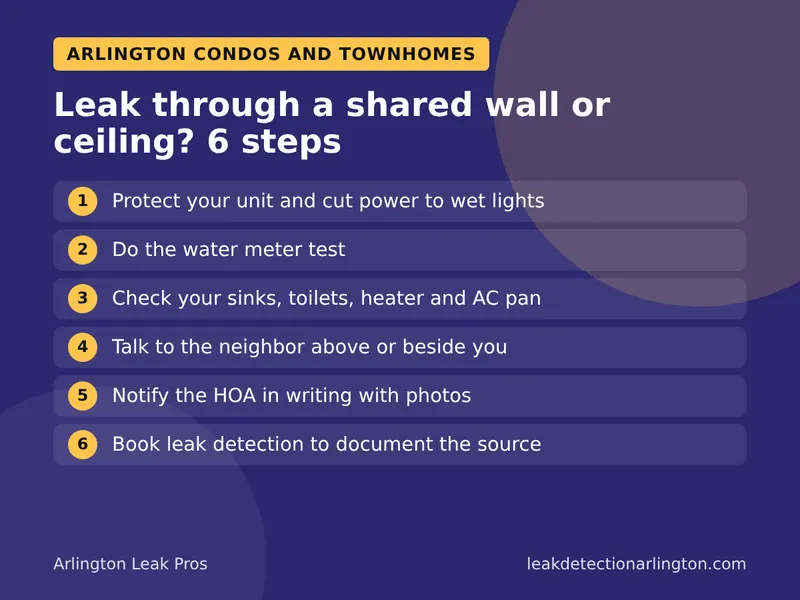
Water through a shared wall or ceiling? How to find which unit it comes from and who is usually responsible.
Hidden Leaks
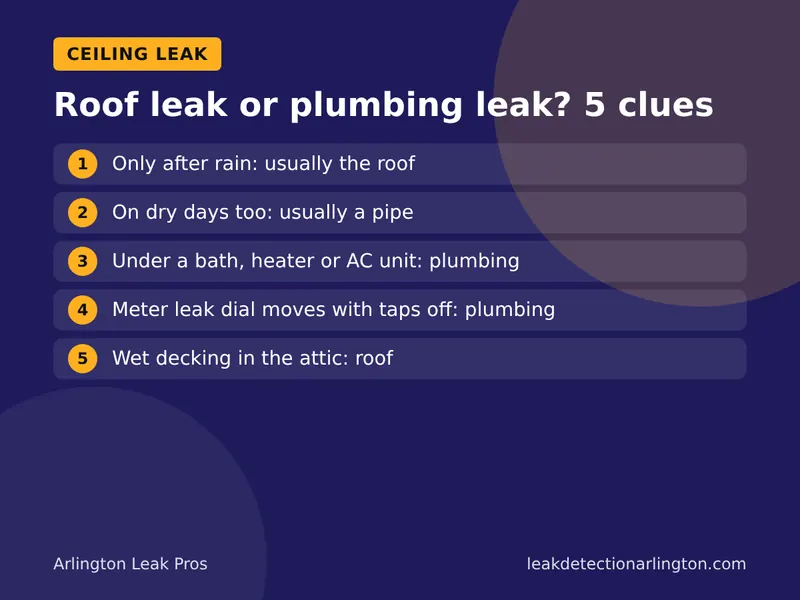
Ceiling stain after a storm or on a dry day? Five clues that separate a roof leak from a plumbing leak.
Arlington Leak Pros finds hidden slab, water line, pool and wall leaks without tearing up your home. Open 24/7.
(817) 285-5426