
Hidden Leaks
Ceiling Leak in Arlington: Is It the Roof or a Plumbing Pipe?
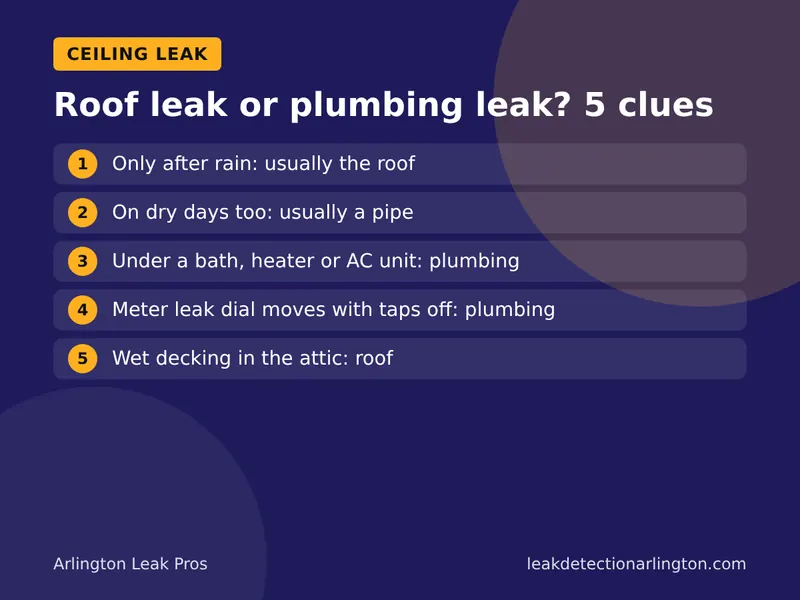
Ceiling stain after a storm or on a dry day? Five clues that separate a roof leak from a plumbing leak.
Hidden Leaks
A stain spreads across your ceiling, but you live on the bottom floor of a two-story condo. Or water shows up along a wall you share with a neighbor. In a condo or townhome, the first question is not just where the leak is. It is whose pipe it is, because that decides who fixes it and who pays.
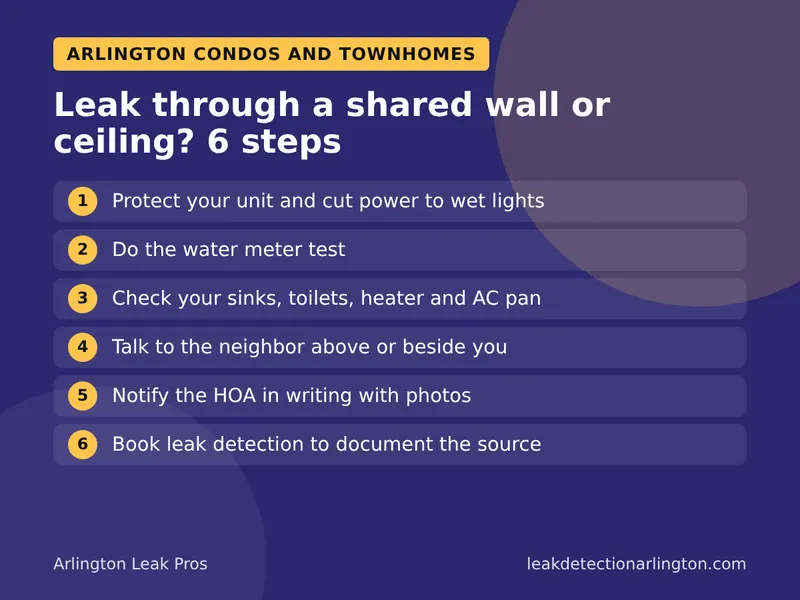
To find a leak in a condo or townhome, check your own unit first with the water meter test and a look under sinks and around toilets. Then tell the neighbor above or beside you and your HOA or property manager in writing. If the source is still unclear, a leak detection visit can test each unit's lines and pinpoint whose pipe is leaking. Call (817) 285-5426 to book one.
Our leak detection Arlington TX technicians use thermal cameras, moisture meters and acoustic gear to trace water across shared walls and ceilings without cutting holes to search, which matters when two owners and an HOA are involved.
Water travels. In a stacked building it runs along joists, pipes and wiring before it drips, so the stain can show up a room or more away from the leak. Shared walls also hide supply lines, drains and the AC condensate lines of the unit next door. That is why the spot you see is rarely the spot that leaks.
Arlington has a lot of two-story condos and townhome rows near UT Arlington, the Entertainment District and along Cooper Street and Collins Street. Many were built in the 1970s and 1980s, so their pipes and drains are now at an age where leaks start.
Think you have a leak? A licensed Arlington technician answers 24/7.
Call Now (817) 285-5426The most common sources in Arlington condos and townhomes are a shower pan or tub drain in the unit above, a toilet wax ring, a dishwasher or washer hose, an AC condensate line, a water heater in a closet, and supply lines inside shared walls. Roof and balcony leaks show up after storms.
| Where you see water | Common source |
|---|---|
| Ceiling under an upstairs bathroom | Shower pan, tub drain or toilet seal above |
| Ceiling near the AC closet | Clogged condensate line or pan above |
| Shared wall by the kitchen | Neighbor's dishwasher, sink or ice maker line |
| Shared wall by a laundry closet | Washer hoses or the washer box |
| Floor along a shared wall on slab | Supply line in the wall or under the slab |
| Ceiling only after rain | Roof, balcony or window above |
If it only shows up when someone upstairs showers, our guide to shower pan leaks explains the test. A clogged AC line is covered in our AC drain line leaks guide.
It depends on where the leak starts and what your HOA documents say. As a rule, the owner whose pipe or fixture leaked is responsible for fixing it. The HOA often covers common pipes and the building structure. Each owner's HO-6 policy usually covers damage inside their own unit. Read your declaration and talk to your insurer.
A written leak detection report helps a lot here. It shows where the leak started, which settles most disputes. Our guide to whether insurance covers water leaks in Texas has more on claims.
Basic leak detection in Arlington runs about $150 to $400. A slab leak search runs about $250 to $600. In a condo the technician may need to test two units, so give access to both if you can. Clear access and a cooperative neighbor keep the visit short and the cost down.
Townhomes on slab can also have leaks under the foundation. If you hear water running with everything off, read our guide to waterline leak detection arlington homes need, or book slab leak detection in Arlington if the floor is warm or damp.
Check your own fixtures and do the meter test, then talk to the neighbor above or beside you and notify the HOA in writing. If it is still unclear, a leak detection visit can test each unit and pinpoint the source.
Usually the owner whose pipe or fixture leaked pays to fix it, and each owner's HO-6 policy covers damage inside their own unit. Shared pipes and the building often fall to the HOA. Your HOA documents decide the details.
Yes. Supply lines, drains, washer boxes and AC lines often run in shared walls. Water can travel along studs and show up several feet from the leak.
Basic leak detection runs about $150 to $400. A slab leak search runs about $250 to $600. Testing two units may take longer.
Hidden Leaks
Ceiling stain after a storm or on a dry day? Five clues that separate a roof leak from a plumbing leak.

Water Lines
High pressure from a failed PRV causes leaks all over the house. Six signs and a simple gauge test.
Hidden Leaks
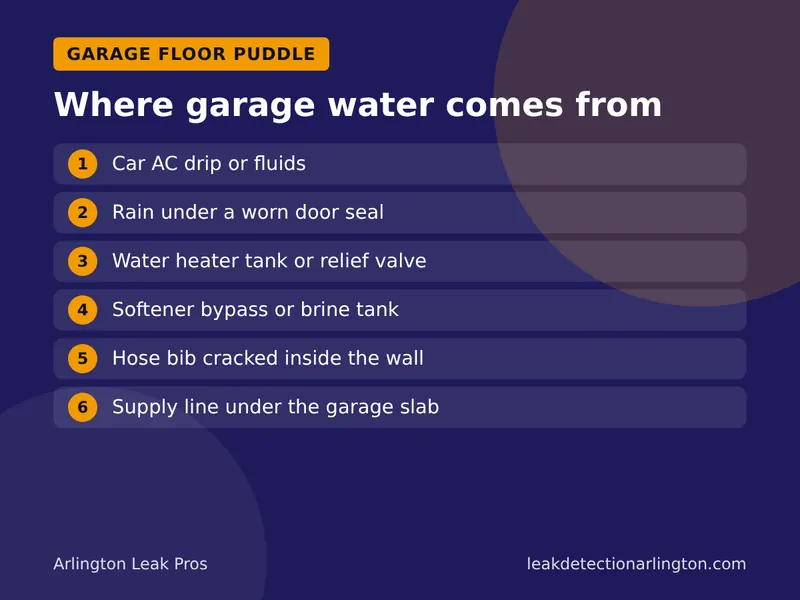
Puddle on the garage floor? How to tell a car or rain puddle from a water heater, softener or pipe leak.
Arlington Leak Pros finds hidden slab, water line, pool and wall leaks without tearing up your home. Open 24/7.
(817) 285-5426