
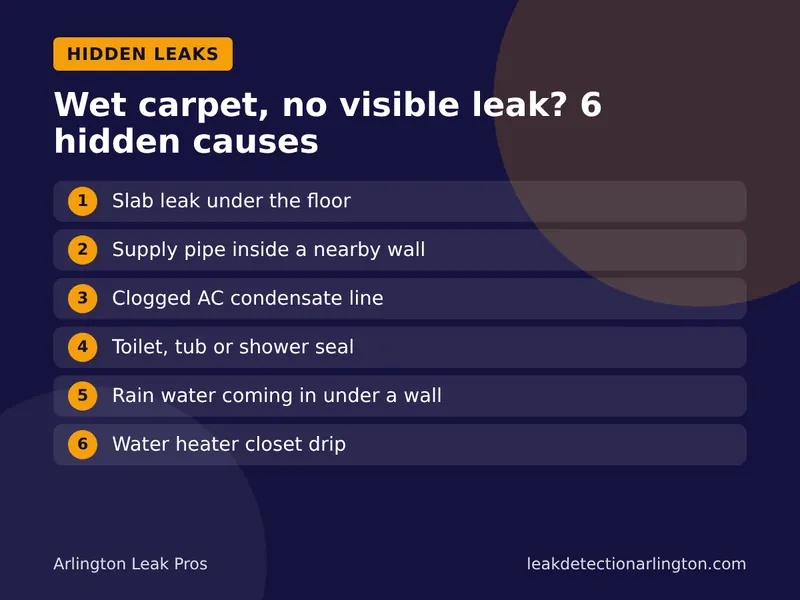
Hidden Leaks
Wet Carpet but No Visible Leak? 6 Hidden Causes in Arlington Homes
A wet patch of carpet with nothing dripping above often comes from under the slab, inside a wall or from the AC. Here is how to narrow it down.
Hidden Leaks
Arlington's water is moderately hard, so many homes have a softener in the garage. When water shows up on the floor around it, the leak could be the softener, the pipes feeding it or something nearby. Here is how to sort it out.
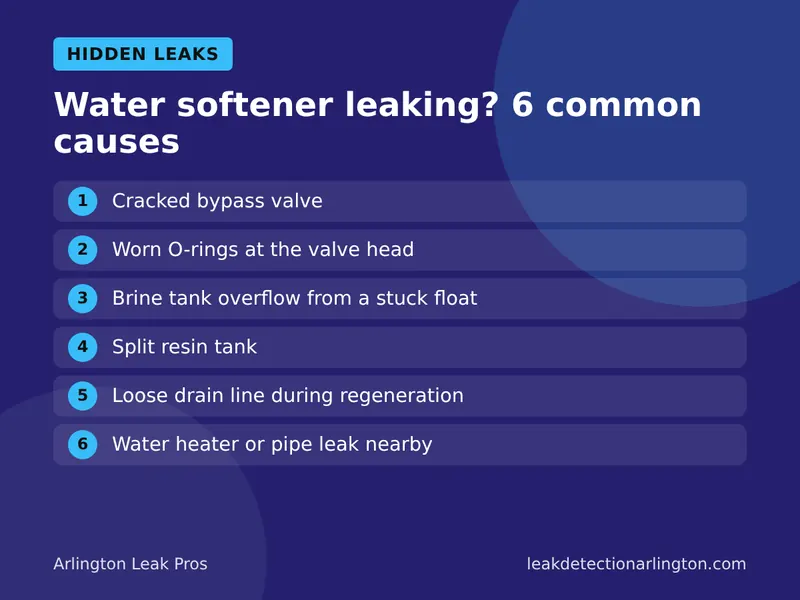
A water softener usually leaks for one of 6 reasons: a cracked bypass valve, loose or worn connections at the valve head, a brine tank that overflows because the float is stuck, a split resin tank, a drain line that pops out during regeneration, or a pipe leak nearby that only looks like the softener. Put the softener in bypass first, then watch where the water comes from. Call (817) 285-5426.
If the floor stays wet after the softener is bypassed, the leak is in the house plumbing. A leak detection company can trace it without guesswork.
The plastic bypass on the back of the valve head can crack, often after a hard freeze in the garage. Water drips from the back even when the softener is idle.
O-rings at the inlet and outlet dry out. Look for drips or white crust where the pipes meet the valve.
If the float or safety valve sticks, the brine tank keeps filling and spills over the top or out the overflow fitting.
The tall tank holds pressure all the time. An old tank can split at the seam or the base. This needs a new tank.
During regeneration, the softener flushes water to a drain. A loose drain hose can jump out and spray the floor at night, which is when most softeners regenerate.
Softeners often sit next to the water heater. Water from a leaking heater pan or relief valve runs over to the softener. See water heater leaking.
Think you have a leak? A licensed Arlington technician answers 24/7.
Call Now (817) 285-5426The softener itself does not cause a slab leak, but a softener that is set wrong or a bypass that is left open can change water chemistry and pressure in ways that wear copper pipes. More often, a slow leak by the softener is simply a supply line leak in the garage wall or slab, which leak detection can confirm.
If the meter keeps moving, the leak may be in the buried line from the meter. Our guide to waterline leak detection arlington homeowners use explains the signs. Basic leak detection in Arlington runs about $150 to $400.
Common causes are a cracked bypass valve, worn O-rings, an overflowing brine tank, a split resin tank, a loose drain line, or a nearby leak from the water heater or a pipe.
Yes. Put it in bypass and unplug it. Your home still gets water, just not softened, while you find the leak.
It is not dangerous, but salty water can damage floors and drywall and it wastes water. A stuck float or safety valve is usually the cause.
Basic leak detection in Arlington runs about $150 to $400. The price is confirmed before the visit.
Hidden Leaks
A wet patch of carpet with nothing dripping above often comes from under the slab, inside a wall or from the AC. Here is how to narrow it down.
Pool Leaks
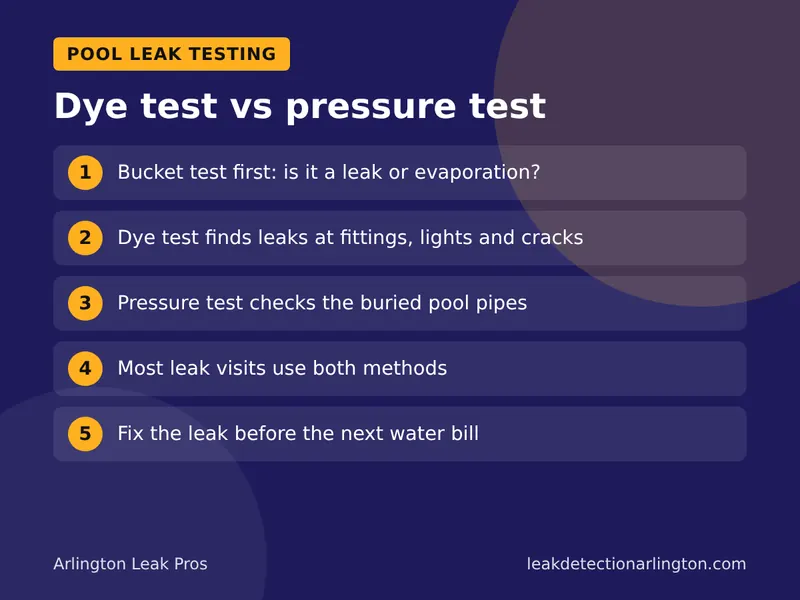
The dye test finds leaks in the shell, lights and fittings. The pressure test checks the buried pipes. Here is how they compare.
Water Leaks
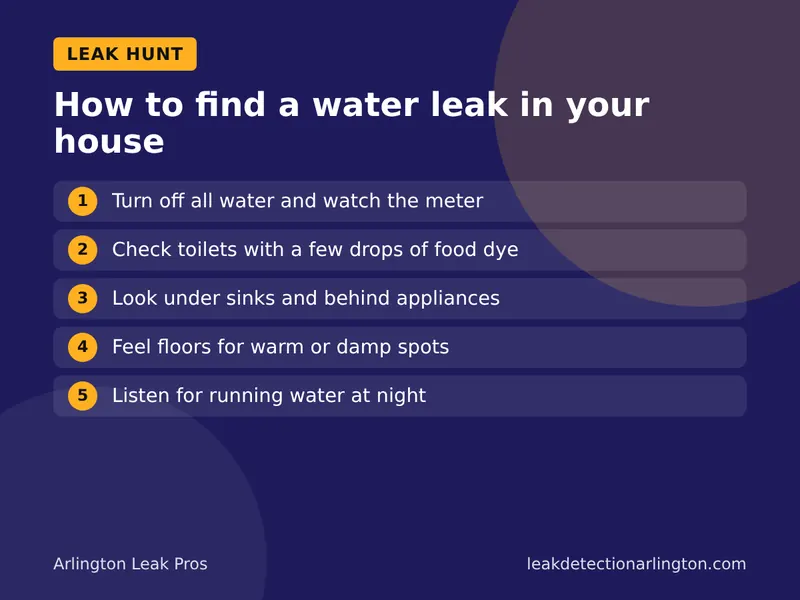
Seven checks any homeowner can do, starting with the water meter, to find a leak in toilets, faucets, appliances, walls or the slab.
Arlington Leak Pros finds hidden slab, water line, pool and wall leaks without tearing up your home. Open 24/7.
(817) 285-5426